Financial analysis and buyer's guide — updated for 2026
Prepaid payment instruments are having a quiet renaissance. As banks tighten Know Your Customer (KYC) and Anti-Money Laundering (AML) screening across nearly every retail rail, a growing segment of online users — particularly in gaming, betting, and trading verticals — is migrating toward instruments that decouple a transaction from a bank account entirely. iCash.One, the voucher system formerly branded as AstroPay Voucher, sits squarely at the center of that shift. This is not a hypothetical trend piece; it's an operational reality for merchants processing deposits in markets where card penetration is uneven and banking friction is high.
This analysis breaks down what iCash.One actually is, how its mechanics compare against the broader prepaid-voucher category, and — critically — what to look for when choosing where to buy one, since the reseller you pick materially affects your total cost of ownership on an unused balance.
1. What iCash.One Actually Is (And Why the Name Changed)
iCash.One is not a new market entrant. It is a rebrand of AstroPay Voucher, the prepaid product line that AstroPay operated outside Europe for over a decade before spinning it into a separately branded entity. The underlying issuer infrastructure — a Cayman Islands-registered operation — and the redemption network largely carried over; what changed was the commercial name under which the product is marketed and, in some cases, the merchant-facing branding at checkout.
This matters practically, not just semantically. If you've used AstroPay Voucher before, you already understand iCash.One's mechanics. If you're encountering it for the first time via a merchant's deposit page, be aware that "AstroPay Voucher" and "iCash.One" may appear interchangeably depending on how recently that specific merchant updated its payment integration. Resellers frequently list both names side by side for exactly this reason — it's not redundancy, it's search and recognition coverage for two overlapping user bases.
Functionally, an iCash.One voucher is a prepaid code — not a physical card, not a reloadable account, not a linked payment method. You purchase a fixed-value code, and that code is redeemed in full or in part at a supporting merchant's checkout. There is no persistent account balance tied to your identity on the issuer's side beyond the code itself, which is precisely what makes it attractive to privacy-conscious users and to merchants operating in jurisdictions where card-based deposits face elevated chargeback or compliance friction.

iCash Voucher
2. How the Mechanics Actually Work
Three structural properties define the product, and each has downstream implications.
It is non-reloadable. Once a voucher is issued and its balance is spent or expires, that specific code is finished — there is no top-up mechanism on the same code. Users needing recurring deposits purchase a new voucher each time. This is a deliberate design choice that limits the instrument's exposure compared to a persistent stored-value account, but it also means voucher management (tracking which codes are used, partially used, or expiring) falls on the user.
Balances are partially spendable and carry over within the code. You are not required to redeem the entire face value in a single transaction. If a merchant charge is less than the voucher's remaining balance, the difference stays attached to that code for future use — provided you're still within the validity window.
Validity is fixed at 12 months from issuance, not from first use. This is a detail competitors' content frequently glosses over. The clock starts at purchase, not at first redemption, which means a voucher bought and left untouched for eight months has only four months of usable life remaining. For anyone purchasing in bulk or ahead of anticipated need, this is the single most consequential fine-print detail in the entire product.
Currency denomination adds a second layer of geographic logic worth knowing: USD-denominated vouchers carry broad global redeemability, while EUR-denominated codes are designed for redemption within Europe. Choosing the currency that matches your destination site at checkout is all it takes to make sure the voucher is ready to use as soon as it arrives.
📚 Related Articles
- What Are iCash.One and iCash.One Vouchers
- How to Top Up iCash.One Voucher with Skrill
- Best Gift Cards to Buy with Crypto in 2026
3. iCash.One in Context: A Comparative Look at the Prepaid-Voucher Category
iCash.One does not operate in isolation. It competes for the same use case — anonymous, bank-independent deposit funding — against a handful of established instruments. Here's how it stacks up on the dimensions that actually matter to a depositor.
| Instrument | Primary Use Case | Geographic Reach | Reloadable |
|---|---|---|---|
| iCash.One (ex-AstroPay) | Gambling, betting, trading platforms | 40+ countries, strong in Asia/Africa/LatAm | No |
| Neosurf | Gaming, retail-adjacent digital goods | Strong in Europe, Australia, parts of Africa | No |
| Flexepin | Gaming, betting | Strong in Canada, Australia, select EU markets | No |
| CASHlib | Betting, adult platforms, digital services | Primarily Europe | No |
| Paysafecard | Broadest general e-commerce and gaming acceptance | Very broad, especially Europe/North America | No (balance can be pooled via the My Paysafecard app) |
The practical takeaway: iCash.One's competitive edge is not universal e-commerce acceptance — it's specialization. Its acceptance footprint concentrates heavily in gambling, sports betting, and forex/CFD brokerage deposit pages, markets where anonymity and bank-independence carry outsized value relative to convenience. If your use case is buying a game key or a streaming subscription, Paysafecard's broader merchant network is arguably a better fit. If your use case is funding a betting account or a trading platform without exposing card details, iCash.One's positioning is deliberate and well-matched.
4. Planning Around a One-Time-Use Instrument
Because an iCash.One voucher is non-reloadable and tied to a single code, the most efficient way to use one is to buy the denomination that matches your actual near-term deposit need, rather than a larger amount "just in case." Any unspent balance stays attached to the code and remains usable for future purchases on supporting merchants — but only within the 12-month validity window, and only as a deposit on a site that accepts iCash.One, not as a transferable balance.
This is a structural feature of the entire prepaid-voucher category, not something specific to how any one reseller operates — Neosurf, Flexepin, and CASHlib work the same way. The practical takeaway is simple: buy to size, use within the year, and treat the remaining balance the way you'd treat cash left on a gift card — spendable on the same rail, not something you convert elsewhere.
iCash Voucher
5. Buying and Redeeming: The Practical Flow
The acquisition sequence is largely standardized across reputable resellers, though the details differ.
| Step | Action | What Happens |
|---|---|---|
| 1 | Select denomination and currency | Reputable stores offer USD and EUR, with several also supporting region-specific currencies such as INR, BDT, EGP, or BRL |
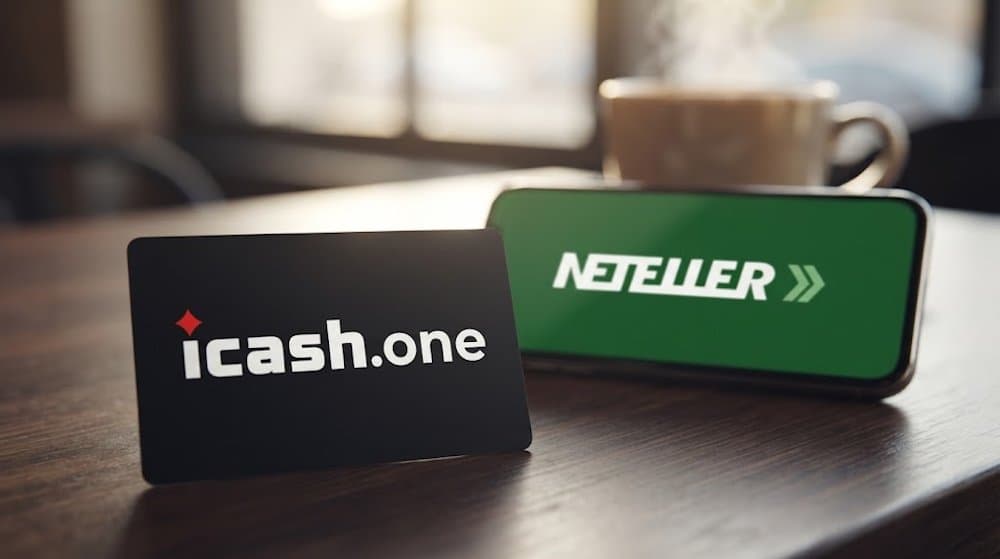
| 2 | Choose a payment method | Crypto (BTC, ETH, USDT via Cryptomus, KuCoin Pay, or Binance Pay), e-wallets (Skrill, Neteller), or standard card checkout, depending on your country |
| 3 | Receive the code by email | For automated fulfillment, delivery lands within minutes of payment confirmation |
| 4 | Redeem at the merchant | Select iCash.One (or AstroPay, if the merchant hasn't updated its label) at the deposit page, enter the code, and confirm — the deduction is instant |
No account registration or identity verification is required at the point of purchase for standard retail-volume orders — a deliberate product design choice that aligns with the instrument's privacy positioning, though it also means the burden of verifying merchant compatibility and currency match falls entirely on the buyer before checkout.
6. Getting the Most Out of Your Voucher: What to Check Before You Redeem
Like any prepaid code — a gift card, a top-up voucher, cash itself — getting full value out of an iCash.One voucher comes down to a few simple habits. None of this is unique to iCash.One; it applies to prepaid codes generally, and following it takes only a moment at checkout.
Treat the code like cash. Once you have it, keep it to yourself until you're ready to redeem it — the same way you'd handle a banknote or a gift card PIN. Buying from an established reseller with a clear support channel, such as Baxity, means there's always someone to reach if you have a question about your order.
Confirm the merchant's current branding. Some platforms still display "AstroPay" at checkout rather than the newer "iCash.One" label — both refer to the same payment rail, so either is fine. A quick glance at the merchant's deposit page confirms which label they're using, so you know what to look for.
Match currency to destination. USD-denominated vouchers redeem virtually worldwide, while EUR-denominated codes are designed for use within Europe. Picking the right currency for your destination site at checkout is the easiest way to make sure your voucher is ready to use the moment it arrives.
Use it within the 12-month window. Vouchers stay valid for a full year from purchase, which is generous for a one-time-use instrument — but if you're buying ahead of a specific need, it's worth using it within that year rather than letting it sit unused. Baxity's own no-exchange-fee policy on vouchers purchased in its store also means there's no cost to holding a small remaining balance until you're ready to spend it.
iCash Voucher
7. Why the Reseller You Choose Matters
iCash.One is issued through a licensed operator, and the voucher itself works the same way no matter where you buy it. What differs between resellers is the experience around that purchase: how fast the code arrives, how transparently fees are disclosed, and how the reseller handles your voucher if your needs change after checkout.
A reseller worth choosing is one that discloses its fee structure clearly before you pay, supports a payment method that fits how you like to transact — crypto included — and offers a straightforward path if you have a question about your order. Baxity checks all three: transparent, fixed pricing at the voucher's face value with no hidden markup, a wide range of crypto and traditional payment options, and email/Telegram support for order-specific questions.
8. Who This Instrument Actually Serves
The strongest fit is a narrow but well-defined user profile: individuals depositing into online casinos, sportsbooks, or forex/CFD brokerages who want to avoid exposing a bank card or personal banking details to a merchant category that carries elevated chargeback and data-sensitivity considerations. It's also a meaningful financial-inclusion tool in markets — much of South Asia, parts of Africa, and Latin America — where card penetration is lower and users transact predominantly through cash-adjacent or e-wallet rails. For general e-commerce, subscription services, or retail gift-giving, broader-acceptance instruments will typically serve better.
9. Where to Buy It
Given how the product works, the practical guidance is straightforward: buy from a reseller that (a) discloses its pricing transparently at the point of sale, (b) supports the payment method — crypto or otherwise — that keeps your own transaction footprint minimal, and (c) sizes the denomination options so you can match your purchase to your actual near-term need rather than overbuying.
Baxity Store's iCash.One voucher catalog (ex-AstroPay) covers denominations from roughly $5 to $1,000 face value across USD, EUR, INR, BDT, EGP, BRL, and AOA, with checkout available via crypto (BTC, ETH, USDT through Cryptomus, KuCoin Pay, or Binance Pay), Skrill, Neteller, and standard card payment. Delivery is automated to email within minutes for standard orders, and no account verification is required beyond checkout. Bulk buyers also have access to dedicated wholesale terms.
👉 Browse current denominations and currencies: Baxity Store — iCash.One Voucher
10. FAQ
1. Does an iCash.One voucher expire, and from when? Yes — 12 months from the date of purchase, not from first use. Any remaining balance becomes inaccessible once that window closes.
2. Can I reload or top up an existing iCash.One voucher? No. The product is non-reloadable by design. A new deposit requires purchasing a separate, new code.
3. Is iCash.One the same as AstroPay Voucher? Functionally, yes — iCash.One is the current brand name for the same prepaid voucher product previously marketed as AstroPay Voucher outside Europe. Some merchants still display the AstroPay label at checkout.
4. Can I pay for an iCash.One voucher with cryptocurrency? Yes, through most established resellers, including Baxity, which supports BTC, ETH, and USDT via third-party crypto processors alongside Binance Pay.
5. What happens if I don't fully use my voucher's balance? The remaining amount stays attached to the code and can be used for future purchases on any supporting merchant, as long as you're still within the 12-month validity window from the date of purchase.
iCash Voucher
This article is an independent analytical review of the iCash.One prepaid voucher product and is not financial advice. Users should confirm merchant acceptance, applicable restrictions, and current terms directly before purchasing.
Comments
Sign in to join the conversation. Every comment is reviewed before it appears on the page.
Sign in to comment
You need an account to leave a comment. Sign in and your name will be used automatically.
No comments yet. Be the first to write one.