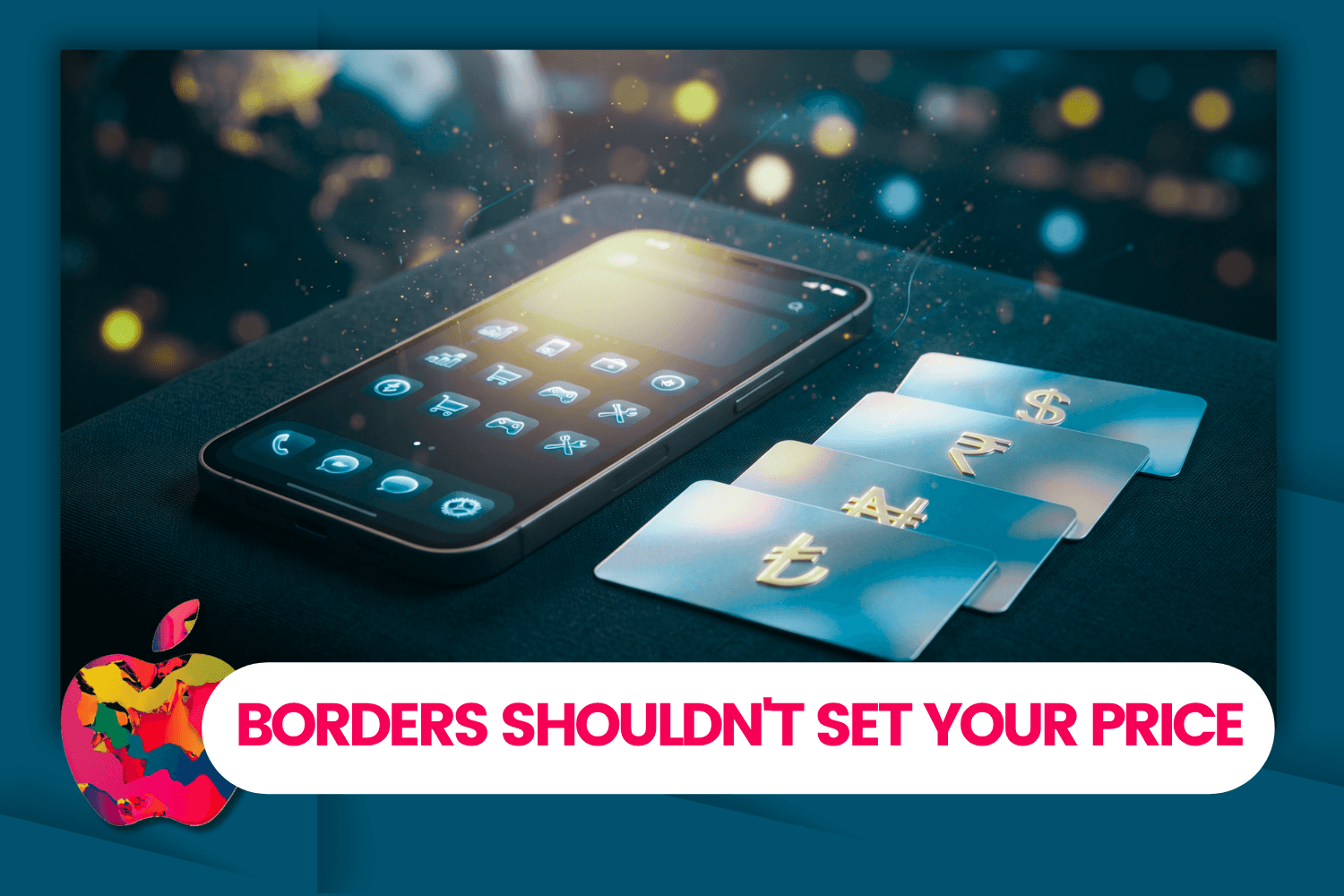
You're Probably Overpaying for Your Apple Subscriptions
Here's something Apple never puts in a banner ad: the exact same Apple Music plan, the exact same iCloud+ storage tier, the exact same app — can cost dramatically different amounts depending on which country your Apple ID is registered to. Not because of taxes. Not because of features. Just because of where your account "lives."
If your Apple ID is set to the United States, the United Kingdom, or most of Western Europe, there's a good chance you're paying near the top of the range for services that people in other regions get for a fraction of the cost — for the identical product. This guide explains exactly why that gap exists, how to check whether it applies to you, and how to legitimately take advantage of it using a region-matched App Store & iTunes gift card from Baxity Store.
App Store & iTunes Gift Card
Quick Reality Check: Are You Overpaying?
Before diving into the mechanics, here's the pattern in plain terms:
| If your Apple ID is set to... | You're likely... |
|---|---|
| US, UK, Germany, France, Canada, Australia | Paying close to Apple's top-tier pricing on every subscription and app |
| Turkey, Nigeria, India, Brazil, Argentina | Sitting on some of the cheapest Apple Music, iCloud+, and app pricing in the world, in dollar terms |
| Anywhere with a currency that's lost value against the dollar recently | Getting an even bigger discount, because Apple doesn't always reprice instantly when a local currency drops |
The rest of this guide explains why that's true — and how to legally set yourself up to benefit from it.
Why Apple Prices the Same Product Differently by Country
This isn't a bug or a loophole someone found — it's how Apple has always run the App Store. Every subscription, app, and in-app purchase is priced in local currency according to a fixed set of "price tiers" that Apple sets per country. In theory, these tiers are meant to reflect local purchasing power and currency value, so that a subscription feels roughly comparable in cost no matter where you live.
The Problem: Currencies Move Faster Than Apple Repricing
In practice, local price tiers don't get adjusted every time a currency moves. Apple typically reviews and updates regional pricing periodically, not continuously. When a country's currency depreciates sharply against the US dollar — as the Turkish lira, Nigerian naira, and Argentine peso all have in recent years — the local-currency price of a subscription often stays flat for a while even as its dollar-equivalent value quietly collapses.
The result: an Apple Music subscription priced in lira, naira, or rupees can end up costing meaningfully less in real dollar terms than the same subscription priced in USD, EUR, or GBP — sometimes by a wide margin, depending on how recently that region's pricing was last reviewed and how much the local currency has moved since.
This Isn't a One-Time Fluke
Because the underlying cause — currency movement outpacing price-tier updates — is structural rather than a one-off event, the gap tends to persist and sometimes widen over time in countries with historically weaker or more volatile currencies. It's a well-documented pattern across digital storefronts generally, not unique to Apple, but the App Store's country-locked pricing makes it especially visible.
Which Regions Tend to Be Cheapest — and Why
Exact prices shift over time, so always check the live listing in the App Store before assuming a specific figure — but the pattern below has held consistently for years:
| Region | Currency | Why it's usually cheaper |
|---|---|---|
| Turkey | TRY | One of the most dramatic currency depreciations against the dollar of any country with a full App Store catalog |
| Nigeria | NGN | Naira devaluation has repeatedly outpaced App Store price-tier updates |
| India | INR | Local pricing tiers reflect regional purchasing power, keeping dollar-equivalent costs low |
| Brazil | BRL | Real volatility periodically pushes dollar-equivalent prices well below Western tiers |
The takeaway: if you're comparing storefronts, don't assume a fixed percentage saving — check the current listing for the specific subscription or app you want, in the region you're considering, before committing.
A Bit of History: Why This Gap Keeps Showing Up
Regional App Store pricing gaps aren't a new phenomenon, and they aren't unique to Apple. Every major digital storefront — Google Play, Steam, Netflix, Spotify, PlayStation Store, Xbox — uses the same basic model: set a price in each country's local currency, then leave it mostly untouched until the next scheduled review. It's an efficient way to run a global storefront, but it creates a predictable side effect whenever a currency moves faster than the review cycle.
Turkey is the textbook example. The lira has gone through some of the steepest sustained depreciation of any actively traded currency in the past several years. Digital subscription prices set in lira years ago simply haven't kept pace, and even after periodic adjustments, the dollar-equivalent cost tends to remain well below Western pricing because the currency keeps moving in the same direction. Nigeria's naira has followed a similar trajectory. India and Brazil are a slightly different case — their App Store tiers were set with local purchasing power in mind from the start, so the gap there is less about sudden currency shocks and more about Apple deliberately pricing lower for a lower-income-per-capita market.
The practical upshot is the same either way: whether the gap comes from currency lag or intentional regional pricing, the price you see on the storefront is real, current, and available to redeem — you just need an Apple ID and a payment method that match that country.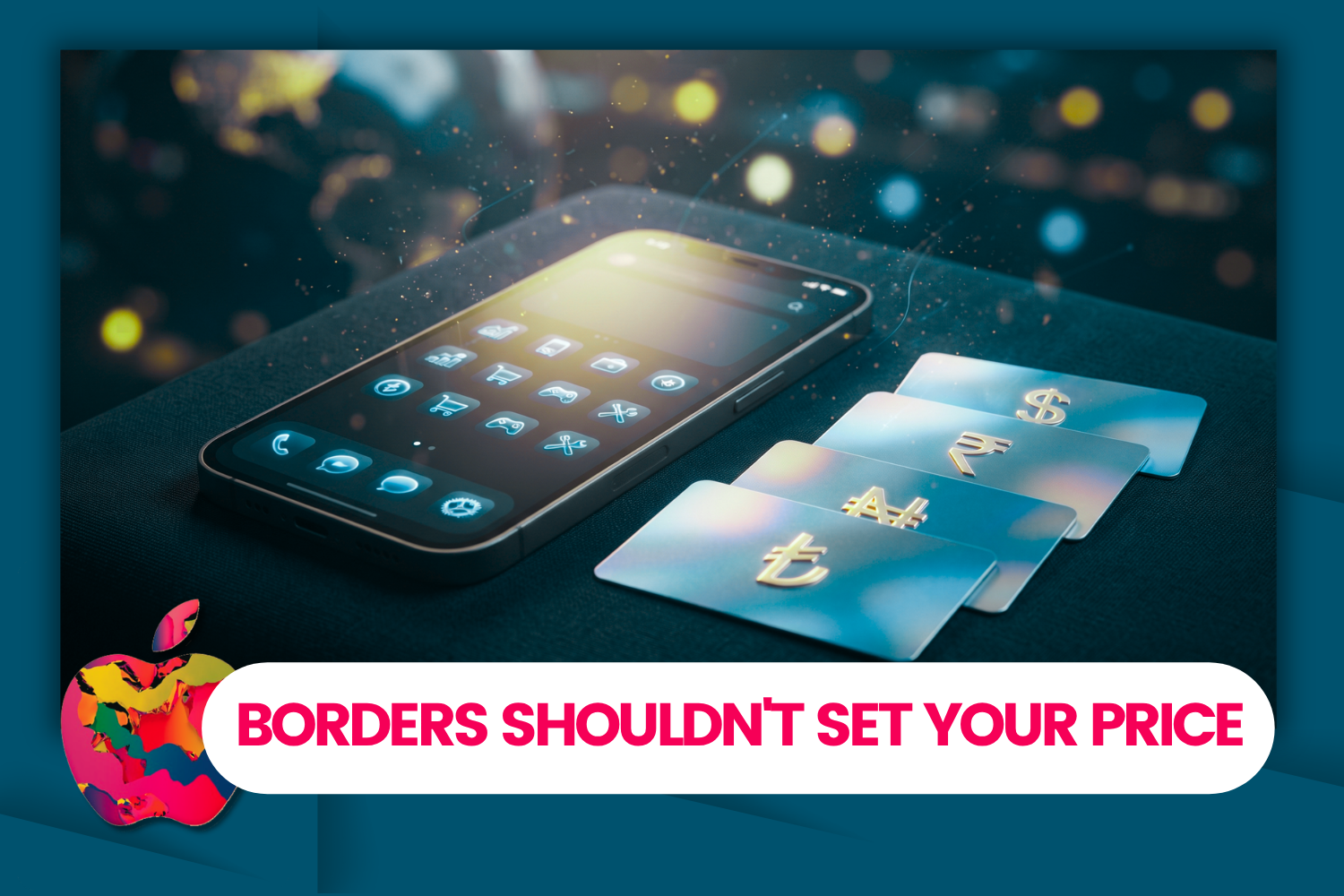
Who This Actually Makes Sense For
Setting up a second Apple ID takes a few minutes, so it's worth being honest about who benefits enough to justify that small amount of setup:
- Heavy Apple Music or Apple TV+ users. Recurring monthly subscriptions are where the savings compound fastest — a gap that looks small on one payment adds up meaningfully over a year of renewals.
- Families paying for an Apple Music or iCloud+ family plan. Family-tier pricing is usually higher in absolute terms, so a percentage saving translates into a bigger real number.
- Frequent app or in-app purchase buyers. Gamers who regularly spend on in-app currency or unlocks can apply the same logic to game purchases, not just subscriptions.
- Freelancers and digital nomads. If you already move between countries or manage multiple digital accounts for work, adding one more region-specific Apple ID is a small addition to an existing workflow.
- Anyone who already pays with crypto by preference. If bank cards aren't your default payment method anyway, buying a regional gift card with crypto removes what would otherwise be the most annoying step.
If you only ever buy one $0.99 app a year, the setup probably isn't worth your time. If you're paying for one or more recurring Apple subscriptions every month, it almost certainly is.
How to Check Current Pricing Before You Commit
Because price tiers change over time, don't rely on numbers from any article — including this one — as gospel. Here's how to check the real, current price yourself in under two minutes:
- Use the App Store's web preview. Apps and some subscriptions can be previewed at apps.apple.com by changing the country code in the URL (e.g., swapping /us/ for /tr/), which shows localized pricing without needing an account in that region.
- Ask someone who lives there. If you know someone with an Apple ID registered to the target country, a quick screenshot of their subscription price is the most reliable confirmation.
- Check community price-tracking resources. Communities that track regional App Store and streaming pricing (often found on forums dedicated to VPNs, deal-hunting, or digital subscriptions) frequently maintain updated comparison tables.
- Convert at the current exchange rate, not an old one. A quick currency conversion of the local price, using today's rate, tells you the real dollar-equivalent cost — this is the number that actually matters, not the local-currency figure on its own.
Only after confirming the current price is it worth buying a gift card denominated for that region — this two-minute check is what separates a real saving from a guess.
What a Full Year Can Look Like
To make the impact concrete, here's an illustrative — not guaranteed — comparison of how a gap can compound over twelve months of renewals. Treat the percentages as a general shape of the pattern, not a promise, and always confirm live pricing first.
| Subscription | Typical Western pricing pattern | Typical discounted-region pattern |
|---|---|---|
| Apple Music Individual | Billed monthly at full USD/EUR/GBP rate | Commonly reported at a fraction of the Western rate in dollar terms |
| Apple Music Family | Higher absolute monthly cost than the individual plan | The percentage gap tends to be similar, but the absolute saving is larger because the base price is higher |
| iCloud+ 200GB | Fixed monthly fee, billed indefinitely | Same storage tier, recurring saving every single month for as long as you keep the plan |
The pattern that matters most isn't any single number — it's that these are recurring charges. A modest saving on a monthly bill, multiplied by twelve renewals a year, is where this actually adds up to something worth the ten minutes of setup.
Other Regions Worth Checking
Turkey, Nigeria, India, and Brazil come up most often in pricing discussions, but they aren't the only regions where the pattern shows up. Argentina, Egypt, Pakistan, and parts of Southeast Asia have all seen similar dynamics at various points, driven by the same combination of currency movement and locally calibrated pricing tiers. If your goal is the lowest possible price rather than a specific region, it's worth checking a few candidates using the method above before settling on one.
That said, sticking to a region with a well-supported, easy-to-buy gift card — like the ones available directly through Baxity — is usually more practical than chasing the single cheapest possible option in a region where funding an account is difficult.
Things to Know Before You Commit
This method is straightforward, but a few practical details are worth understanding upfront so there are no surprises:
- Family Sharing works per-region. A subscription purchased through a secondary, region-specific Apple ID generally can't be shared via Family Sharing with a primary account registered elsewhere.
- Content libraries can differ slightly by region. A small number of apps, songs, or shows may not be available in every storefront, though the overwhelming majority of mainstream content is consistent globally.
- You'll be signing in and out, or using a secondary sign-in feature. Depending on the service and device, you may need to switch which Apple ID is active for a purchase, or use an app's built-in option to subscribe under a different Apple ID.
- Balance can't be transferred between Apple IDs. Once redeemed onto the new account, the balance stays there — buy exactly what you need for that specific account.
- Renewals will draw down the same balance. Since there's no card on file, make sure you keep enough balance loaded for automatic renewals, or be prepared to top up again before the next billing date.
None of these are dealbreakers — they're just the operational details that make the difference between a smooth setup and a confusing first week.
Wait — Is This Actually Legal?
Yes. Nothing about paying the price Apple itself set for a given country involves circumventing any law. You're not hacking a price, forging a discount code, or exploiting a technical vulnerability — you're simply purchasing at the rate Apple has published for that storefront, using a valid, region-matched payment method (in this case, a gift card denominated in that country's currency).
The one real constraint: your Apple ID's registered country has to match the currency of the gift card you redeem. Apple locks each account to a single storefront country, and gift cards are denominated to match. This is the actual mechanic behind everything in this guide — not a workaround, just how the system is designed to work.
How to Actually Set This Up
Most people don't need to touch their primary Apple ID at all. The simplest approach is to set up a secondary Apple ID registered to the cheaper region, and use it specifically for the subscription or purchases you want at that region's pricing.
- Create a new Apple ID and, during setup, select the country you want (e.g., Turkey, Nigeria, India, Brazil) — no local bank card is required to do this, since you can select "None" as the payment method.
- Buy a region-matched gift card — for example, a TRY-denominated App Store & iTunes card if you registered the new Apple ID to Turkey — from Baxity Store.
- Redeem the code on the new Apple ID to fund its balance — this satisfies Apple's requirement for a valid payment method without needing a local bank account.
- Subscribe or purchase using that Apple ID's App Store, at that region's pricing.
Some services (like Apple Music or Apple TV+) let you sign in with a secondary Apple ID specifically for subscription management, even while your primary Apple ID stays on your usual region for everything else. Others, like app purchases, will simply use whichever Apple ID's App Store session is active at checkout.
₺ TRY
App Store & iTunes TRY
₦ NGN
App Store & iTunes NGN
₹ INR
App Store & iTunes INR
R$ BRL
App Store & iTunes BRL
Common Mistakes People Make Chasing Cheaper Pricing
- Buying the wrong currency card. A USD gift card will not redeem on an account registered to Turkey, and vice versa — the card's currency must match the Apple ID's country exactly.
- Assuming every app or subscription is cheaper everywhere. Pricing gaps vary by product and update over time — always check the live price for the specific item before assuming a saving.
- Switching a primary Apple ID's country carelessly. Changing your main account's region can affect existing purchases, subscriptions, and payment methods tied to it. A secondary Apple ID avoids this entirely.
- Forgetting the balance doesn't expire. If you don't use the full balance right away, it simply stays on the account — no need to spend it all in one sitting.
Why This Works Even Better If You Pay With Crypto
Buying a Turkish lira or Nigerian naira gift card is, for most people outside those countries, a genuinely awkward transaction through normal channels — your local bank card often can't be charged in a foreign currency the way a regional processor expects, and some payment providers block or flag exactly this kind of cross-border purchase.
Paying with cryptocurrency sidesteps that friction entirely. Bitcoin, Ethereum, and USDT aren't tied to any single country's banking rails, so a crypto payment for a TRY or NGN gift card goes through exactly the same way a USD one would — no foreign transaction fees, no bank flags, no currency conversion headaches on your end.
How to Buy a Region-Matched Apple Gift Card with Crypto — Step by Step
- Decide which region's pricing you're targeting and confirm the current price of your subscription or app there.
- Set up a secondary Apple ID with that country selected, using "None" as the payment method.
- Go to the App Store & iTunes category on Baxity Store and select the denomination matching that region's currency.
- At checkout, choose a crypto payment method — Bitcoin, Ethereum, or USDT — to avoid any foreign-currency friction.
- Receive your 16-digit code by email, typically within minutes.
- Redeem it on the new Apple ID via "Redeem Gift Card or Code" in the App Store app.
- Subscribe or purchase using that Apple ID's storefront to lock in the local price.
FAQ
1. Is it against Apple's terms to use a cheaper region? No — you're paying the price Apple itself set for that storefront, using a valid regional payment method. The only requirement is that your Apple ID's country matches the currency you're paying in.
2. Do I need to change my main Apple ID's country? No. Most people use a secondary Apple ID specifically for the cheaper-region subscription, leaving their primary account untouched.
3. Can I use a USD gift card on a Turkey-registered Apple ID? No. The card's currency must exactly match the country your Apple ID is registered to.
4. Will prices stay this low forever? Not necessarily. Apple periodically reviews and adjusts regional pricing, so gaps can narrow or shift. Always check the current listing before assuming a specific saving.
5. Does the App Store balance expire? No. Redeemed balance stays on the account indefinitely until used.
6. Which regions are usually the cheapest? Turkey, Nigeria, India, and Brazil have consistently offered some of the lowest dollar-equivalent App Store pricing, though this can shift over time.
7. Can I pay for the gift card with crypto? Yes — Baxity Store accepts Bitcoin, Ethereum, USDT, and other crypto options for all App Store & iTunes gift card denominations.
8. What happens if I set up the new Apple ID with the wrong country? You'll need to purchase a gift card matching whatever country you selected — double-check the country during setup before buying a card.
9. Can I use the secondary Apple ID for Apple Music specifically? Yes — Apple Music supports signing in with a different Apple ID for subscription purposes on many devices; check the current sign-in options in the Music app.
10. How fast will I receive my gift card code? Typically within minutes of payment confirmation, delivered by email and also visible in your Baxity order history.
11. Can I use Family Sharing across two Apple IDs in different regions? Generally no — Family Sharing groups are tied to a single storefront region, so a subscription bought through a region-specific secondary account usually can't be shared with a primary account registered elsewhere.
12. What happens when my gift card balance runs out mid-subscription? Auto-renewal will fail if there's no balance and no other payment method on the account, and Apple will typically pause the subscription until it's topped up again — so it's worth keeping enough balance loaded ahead of each renewal date.
13. Is the content library the same in every region? The vast majority of apps, music, and shows are available globally, but a small number of titles can differ by storefront — worth a quick check if you're after a very specific app or piece of content.
14. Can I move my existing purchases to the new, cheaper-region Apple ID? No — purchases and subscriptions are tied to the Apple ID that bought them and can't be transferred to a different account.
15. Do I need a VPN to do any of this? No. Changing an Apple ID's registered country and redeeming a matching gift card doesn't require a VPN — the country setting is handled directly in the Apple ID's account settings, not by your network location.
16. Is there a minimum amount I should load onto the new Apple ID? Load at least enough to cover the first renewal of whatever subscription you're setting up, plus a small buffer — exact amounts depend on the denomination options available for that region's gift card.
📚 Related Articles
- How to Buy Apple Gift Cards and How to Redeem – FAQ
- Apple vs. App Store vs. iTunes: What You Need to Know
- What Can You Do with an iTunes Gift Card from Baxity Store
- Apple Gift Card Discount 2025 – Buy Cheap & Bulk Online
- Best Deal on Apple Gift Cards – Save More!
- How to Top Up Your Apple or Google Play Accounts
- How to Buy Crypto with Apple Pay in 2025
- How to Pay on Amazon with Crypto
- The Top 10 Gift Cards to Save Money in 2021
- Nintendo eShop Apple Pay: Buy Cards Instantly
- Buy Xbox Gift Cards with Apple Pay
- Get PlayStation Store Credits with Apple Pay
- Buy Steam Wallet Credits with Apple Pay
- Buy PUBG Mobile UC with Apple Pay
Ready to stop paying top-tier prices for a subscription that costs a fraction elsewhere? Head to the App Store & iTunes category on Baxity Store, pick the regional denomination you need, and pay with crypto for instant, borderless delivery.
Comments
Sign in to join the conversation. Every comment is reviewed before it appears on the page.
Sign in to comment
You need an account to leave a comment. Sign in and your name will be used automatically.
No comments yet. Be the first to write one.