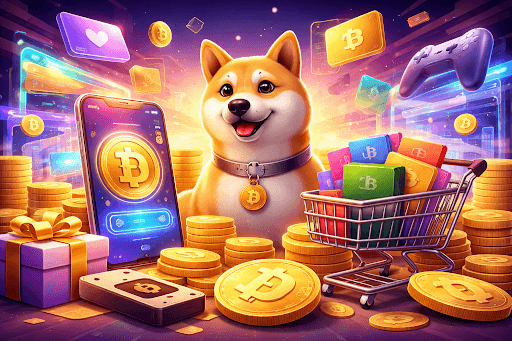
Dogecoin is a decentralized digital currency that allows users to send and receive payments over the internet without relying on banks or other financial intermediaries. Like many other cryptocurrencies, Dogecoin operates on a blockchain network that records transactions in a public and transparent ledger maintained by thousands of computers around the world.
The cryptocurrency is known by its ticker symbol DOGE, which is commonly used on cryptocurrency exchanges and trading platforms. The ticker represents the native token of the Dogecoin network and is used to identify the asset when it is traded, transferred, or stored in crypto wallets.
Dogecoin was launched in December 2013 by software engineers Billy Markus and Jackson Palmer. The project was originally created as a lighthearted alternative to Bitcoin. At the time, the cryptocurrency industry was growing rapidly, and the creators wanted to develop a digital currency that felt more approachable and less serious than many of the existing projects.
One of the reasons Dogecoin is classified as a memecoin is its branding. The project was inspired by the popular Doge internet meme featuring a Shiba Inu dog surrounded by humorous text written in broken English. This playful theme quickly attracted attention online and helped the cryptocurrency gain popularity on forums and social media platforms.
The Dogecoin community has played a major role in the growth of the project. Supporters often organize campaigns, charity fundraisers, and social media initiatives that promote the use of DOGE. Over time, this active community helped transform Dogecoin from a joke project into one of the most recognized cryptocurrencies in the market.
Today, DOGE is used for several purposes. Many users send it as a fast and inexpensive way to transfer value between individuals. It is also widely known for its role in tipping content creators on online platforms. In addition, Dogecoin is actively traded on cryptocurrency exchanges, where it can be bought, sold, and exchanged for other digital assets.
Using Cryptocurrency for Digital Purchases at Baxity Store
Baxity Store is a digital marketplace designed to make everyday online purchases more accessible for people who use cryptocurrency. Instead of dealing with complex blockchain tools or payment gateways, users can choose digital products and pay with supported crypto assets through a familiar online shopping process. This approach simplifies the experience and allows cryptocurrency to be used in a practical way for common online needs.
The platform focuses on digital goods that are widely used in everyday internet services. Customers can purchase items such as gift cards, prepaid cards, and gaming credits that can later be redeemed on popular online platforms. By converting digital assets into these products, users can access services, entertainment, and online subscriptions without needing traditional payment methods.
Baxity Store also offers various vouchers and prepaid solutions connected to well known digital ecosystems and payment platforms. These products make it possible to transform cryptocurrency into balances that can be used for digital services, streaming platforms, gaming stores, and other online purchases.
With instant delivery of digital codes after payment confirmation, the process is designed to be fast and convenient. Support for multiple cryptocurrency payment options allows users to complete purchases efficiently while maintaining the flexibility of digital assets. In this way, Baxity Store acts as a bridge between cryptocurrency and practical online spending, making it easier to use digital assets in everyday situations.
The History of Dogecoin
Dogecoin was launched in December 2013 during a period of rapid growth in the cryptocurrency industry. At that time many new digital currencies were being created, often with ambitious technical goals. Dogecoin took a very different approach. It was designed as a simple and friendly cryptocurrency that could appeal to a broader audience.
The project was created by software engineers Billy Markus and Jackson Palmer. Markus was a developer based in the United States who wanted to build a digital currency that was fun and accessible. Palmer worked in marketing and had previously made jokes about the growing number of cryptocurrencies appearing online. After Palmer registered the Dogecoin domain and shared the idea publicly, Markus contacted him and helped turn the concept into a functioning blockchain project.
The branding of Dogecoin was inspired by the popular Doge meme that circulated widely on the internet at the time. The meme featured a Shiba Inu dog with humorous captions written in colorful Comic Sans text. This lighthearted theme helped Dogecoin stand out in a market that was often focused on complex technology and financial speculation.
Shortly after its launch, Dogecoin gained significant attention on social media and online forums. Communities on platforms such as Reddit quickly adopted the cryptocurrency and began using it as a tipping currency to reward helpful or entertaining content. The friendly culture surrounding the project helped attract thousands of new users within a short period of time.
Several milestones played an important role in the early growth of Dogecoin:
- In 2013 Dogecoin officially launched and quickly built an active online community.
- In 2014 the community raised funds in Dogecoin to help send the Jamaican bobsled team to the Winter Olympics in Sochi.
- The same year users organized charitable campaigns and fundraising events that increased the visibility of the project.
- Dogecoin later introduced merge mining with Litecoin, which helped strengthen the network security.
Over time both founders stepped away from the project. Jackson Palmer publicly distanced himself from the cryptocurrency industry, while Billy Markus also left active development. Despite their departure, Dogecoin continued to exist as an open source project maintained by independent developers and supported by its large community.
In 2021 the Dogecoin Foundation was re established to support the long term development of the ecosystem. The organization focuses on protecting the Dogecoin brand, coordinating technical improvements, and promoting wider adoption of the cryptocurrency. This revival marked an important step in giving the project a more structured framework while still preserving its community driven spirit.
How Dogecoin Works
Dogecoin operates on its own blockchain, which is a distributed digital ledger that records all transactions made with the cryptocurrency. This blockchain stores a complete history of transfers between users and is maintained by a network of independent computers around the world. Because the ledger is public and decentralized, no single organization controls the system.
The Dogecoin network functions as a peer to peer system. This means users can send DOGE directly to one another without the need for banks, payment companies, or other intermediaries. Transactions are broadcast to the network and then verified by participants who help maintain the blockchain.
When a user sends Dogecoin, the transaction is shared with the network and grouped with other transactions into a block. These blocks are then added to the blockchain in chronological order. Once a transaction is confirmed and included in the ledger, it becomes part of the permanent transaction history.
Nodes play a key role in the Dogecoin ecosystem. A node is a computer that runs the Dogecoin software and helps validate transactions and maintain the blockchain. Each node keeps its own copy of the ledger and checks whether new transactions follow the network rules. This decentralized structure helps prevent fraud and ensures that the network remains transparent.
Transaction confirmation occurs when miners add new blocks to the blockchain. Each new block includes verified transactions and links to the previous block. As additional blocks are added, earlier transactions become more secure and harder to reverse.
Network security is achieved through decentralization and cryptographic verification. Because thousands of nodes maintain copies of the blockchain, it becomes extremely difficult for a malicious actor to alter transaction records. The combination of distributed infrastructure, cryptography, and mining activity helps protect the integrity of the Dogecoin network.
| Component | Description |
|---|---|
| Dogecoin Blockchain | A public ledger that records all DOGE transactions permanently. |
| Peer to Peer Network | Allows users to send and receive DOGE directly without intermediaries. |
| Transactions | Transfers of DOGE between wallets that are broadcast to the network. |
| Nodes | Computers that verify transactions and maintain copies of the blockchain. |
| Block Confirmations | The process of adding verified transactions into blocks on the blockchain. |
| Network Security | Achieved through decentralization, cryptography, and distributed validation. |
Together, these components form the foundation of the Dogecoin ecosystem. By combining a decentralized blockchain, independent nodes, and a peer to peer transaction model, the network allows users anywhere in the world to transfer DOGE quickly and securely without relying on centralized financial institutions.
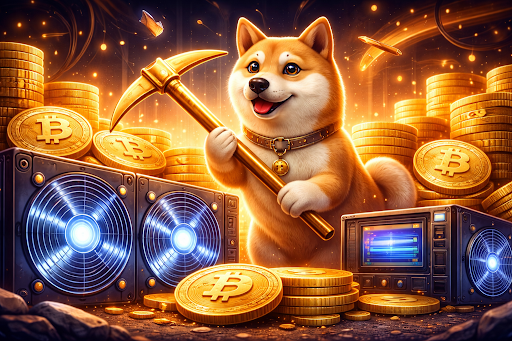
Dogecoin Mining and Consensus Mechanism
Dogecoin uses a Proof of Work consensus mechanism to validate transactions and maintain the security of its blockchain. In this system, participants known as miners use computing power to solve complex mathematical problems. The first miner that successfully solves the problem earns the right to add a new block of transactions to the blockchain.
Mining serves two important purposes in the Dogecoin network. First, it confirms and records new transactions in the blockchain. Second, it helps secure the network by making it extremely difficult for attackers to manipulate transaction history.
Unlike Bitcoin, which uses the SHA 256 hashing algorithm, Dogecoin relies on the Scrypt algorithm. Scrypt was designed to be less resource intensive and originally allowed a wider range of participants to mine the cryptocurrency. This algorithm focuses more on memory usage rather than pure computational power, which historically made mining more accessible to individual users.
Another important feature of the Dogecoin network is merge mining with Litecoin. Introduced in 2014, merge mining allows miners to secure both blockchains at the same time using the same computing resources. This means that miners working on the Litecoin network can also process Dogecoin blocks without additional energy consumption. The integration improved the security of the Dogecoin blockchain and encouraged more miners to participate.
New blocks in the Dogecoin blockchain are created approximately once every minute. When miners gather pending transactions from the network, they form a candidate block and begin the process of solving the required cryptographic puzzle. Once the solution is found, the block is broadcast to the network and verified by other nodes before it becomes part of the official blockchain.
Miners receive rewards for contributing their computing power to the network. Each successfully mined block generates a fixed reward of 10,000 DOGE. These rewards provide an incentive for miners to continue securing the blockchain and processing transactions. Over time this mechanism also introduces new coins into circulation, which supports the ongoing operation of the Dogecoin ecosystem.
Dogecoin Tokenomics
Dogecoin has a unique economic model compared with many other cryptocurrencies. While some digital assets are designed to have a limited supply, Dogecoin follows a different approach. Its tokenomics were created to encourage active use of the currency rather than long term hoarding.
One of the most notable characteristics of Dogecoin is the absence of a maximum supply. Unlike Bitcoin, which has a fixed limit of 21 million coins, Dogecoin does not have a hard cap. New DOGE coins continue to enter circulation through the mining process.
As a result, the circulating supply of Dogecoin steadily grows over time. Today there are more than 140 billion DOGE in circulation, and the supply continues to expand as miners add new blocks to the blockchain. This design helps maintain liquidity in the network and supports frequent transactions.
Dogecoin also follows a predictable issuance schedule. Approximately 5 billion new DOGE are created each year through block rewards. Because the total supply grows over time, the inflation rate gradually decreases as the overall supply becomes larger.
The key elements of Dogecoin tokenomics include:
- No maximum supply, meaning the number of coins can continue increasing over time.
- A large circulating supply that exceeds 140 billion DOGE.
- Annual issuance of around 5 billion new DOGE through mining rewards.
- An inflationary model designed to encourage spending and active use of the currency.
- A block time of about one minute, allowing transactions to be processed relatively quickly.
- Low transaction fees that make DOGE suitable for small transfers and online tipping.
These characteristics make Dogecoin different from many cryptocurrencies that focus on scarcity. Instead of prioritizing a limited supply, the Dogecoin model supports frequent transfers, community tipping, and everyday digital payments.
What Makes Dogecoin Unique
Dogecoin stands out in the cryptocurrency market because of its unusual origin and strong cultural identity. While many blockchain projects focus mainly on technology or financial innovation, Dogecoin became widely known through internet culture and community engagement. Its combination of humor, accessibility, and online popularity helped it develop a unique position among digital assets.
One of the defining aspects of Dogecoin is its connection to meme culture. The cryptocurrency was inspired by the famous Doge meme that features a Shiba Inu dog with humorous captions. This playful branding made the project more approachable and helped attract people who might otherwise find cryptocurrencies complicated or intimidating.
Another important factor behind Dogecoin’s growth is its community. From the beginning, users gathered around the project on forums and social platforms where they promoted the use of DOGE for tipping, donations, and social initiatives. This community driven spirit helped maintain interest in the cryptocurrency even during periods when the broader market slowed down.
Dogecoin also gained significant visibility through social media. Posts, memes, and discussions about DOGE frequently trend on platforms such as Reddit and X. Online campaigns and viral content have repeatedly drawn attention to the cryptocurrency and contributed to sudden increases in popularity.
Support from well known public figures has also played a role in Dogecoin’s recognition. Entrepreneurs and celebrities have occasionally mentioned or supported the cryptocurrency online. One of the most notable supporters has been Elon Musk, whose public comments and social media posts have brought global attention to Dogecoin on several occasions.
Finally, Dogecoin is often considered easy to use compared with many other digital assets. Transactions are relatively fast, fees are typically low, and the overall concept behind the cryptocurrency is simple to understand. This accessibility has helped Dogecoin become a common entry point for people who are new to the world of cryptocurrency.
What Is Dogecoin Used For
Dogecoin was originally created as a fun and accessible cryptocurrency, but over time it developed several practical use cases. Thanks to its relatively fast transactions and low fees, DOGE is often used for small payments and online interactions. The simplicity of the network has made it popular among users who want to transfer value quickly without complex processes.
The cryptocurrency is widely recognized for its role in internet communities, where it became a common way to reward content creators and support various initiatives. Over the years Dogecoin has also gained acceptance on some online platforms and trading exchanges, which expanded its potential uses.
Common uses of Dogecoin include:
- Sending peer to peer transfers between users anywhere in the world without relying on traditional financial institutions.
- Tipping content creators on platforms such as forums, social media, and streaming services as a way to reward useful or entertaining content.
- Paying for goods and services from online merchants that accept DOGE as a payment method.
- Supporting charitable initiatives and community fundraising campaigns organized by Dogecoin supporters.
- Trading and investing on cryptocurrency exchanges where DOGE can be bought, sold, or exchanged for other digital assets.
These use cases reflect the original spirit of the project. Dogecoin continues to function both as a digital payment tool and as a community driven cryptocurrency that thrives on online participation and social engagement.
Advantages and Disadvantages of Dogecoin
Like any cryptocurrency, Dogecoin has both strengths and limitations. Some of its characteristics make it attractive for everyday digital payments and community driven activities, while other aspects raise questions about its long term sustainability compared with more technologically advanced blockchain projects. Understanding both sides helps users evaluate the role of DOGE within the broader cryptocurrency market.
Advantages of Dogecoin include:
- Fast transaction speeds thanks to the short block time of about one minute.
- Low transaction fees that make the network suitable for small transfers and tipping.
- A large and active community that continuously promotes the use of DOGE online.
- High public recognition, which helps maintain liquidity and widespread exchange support.
However, there are also several disadvantages that users should consider:
- An inflationary supply model where new coins are constantly created through mining.
- Price movements that are often influenced by social media trends and hype.
- A smaller developer ecosystem compared with major blockchain projects such as Bitcoin or Ethereum.
These advantages and disadvantages show that Dogecoin occupies a unique position in the cryptocurrency ecosystem. While it may not focus on complex technological innovation, its simplicity, strong community, and cultural influence continue to support its relevance in the digital asset market.
Dogecoin vs Bitcoin
Dogecoin and Bitcoin are both decentralized cryptocurrencies that operate on blockchain networks and use a Proof of Work consensus mechanism. Despite these similarities, the two projects were created with very different goals and economic models. Bitcoin was designed as a scarce digital store of value, while Dogecoin was created as a fun and accessible cryptocurrency for everyday transactions and online interactions.
Several key differences help explain how the two cryptocurrencies function within the broader crypto ecosystem.
| Feature | Dogecoin | Bitcoin |
|---|---|---|
| Supply | No maximum supply. New coins continue to be created every year. | Limited supply capped at 21 million BTC. |
| Block Time | Around 1 minute per block. | Around 10 minutes per block. |
| Transaction Fees | Usually low, making small transfers practical. | Fees can vary and may become higher during periods of heavy network activity. |
| Purpose | Designed for payments, tipping, and community use. | Often viewed as a store of value and digital alternative to gold. |
| Popularity | Known for meme culture and strong online communities. | The most widely recognized and valuable cryptocurrency. |
Although Dogecoin and Bitcoin share some technical foundations, their economic models and communities developed in different ways. Bitcoin focuses on scarcity and long term value preservation, while Dogecoin emphasizes accessibility, fast transfers, and community driven engagement.
Is Dogecoin a Good Investment
Dogecoin is often discussed as a potential investment, but like most cryptocurrencies it carries a high level of uncertainty. The price of DOGE can change significantly over short periods of time, which makes it both attractive for traders and risky for long term investors.
One of the most notable characteristics of Dogecoin is its volatility. Market sentiment, social media trends, and public statements from influential figures can have a strong impact on the price. Because of this, the value of DOGE has experienced sharp increases and declines throughout its history.
In some cases investors include Dogecoin as a small part of a diversified cryptocurrency portfolio. The idea behind diversification is to spread risk across different digital assets rather than relying on a single cryptocurrency. However, many analysts consider DOGE to be more speculative compared with major projects such as Bitcoin or Ethereum.
Memecoins like Dogecoin are often driven by community enthusiasm and online attention rather than technological innovation or long term economic models. This does not necessarily mean they have no value, but it does mean that their market behavior can be unpredictable.
For these reasons, it is important for individuals to conduct their own research before buying any cryptocurrency. Understanding how the project works, how the market behaves, and what risks are involved can help investors make more informed decisions when considering Dogecoin as part of their strategy.
How to Buy Dogecoin
Dogecoin can be purchased through several types of cryptocurrency services. Today DOGE is listed on many major platforms, which makes it relatively easy for new users to acquire the asset. The exact process may vary depending on the service, but the general steps are usually similar.
One of the most common ways to buy Dogecoin is through cryptocurrency exchanges. These platforms allow users to create an account, deposit funds, and purchase DOGE using fiat currency or other cryptocurrencies. Large exchanges typically provide trading pairs with currencies such as USD, EUR, or USDT.
Another option is to use online cryptocurrency exchangers. These services allow users to swap one asset for another without using a full trading interface. For example, a user may exchange Bitcoin or a stablecoin for Dogecoin through a simple conversion process.
Some users prefer peer to peer platforms. On these platforms buyers and sellers trade directly with each other. The platform usually acts as an intermediary that provides escrow services to help ensure the transaction is completed securely.
After purchasing DOGE, users typically store their coins in a cryptocurrency wallet. Wallets allow users to manage private keys and control access to their digital assets. Depending on personal preferences, Dogecoin can be stored in exchange wallets, software wallets installed on a device, or hardware wallets designed for long term storage.
How to Store DOGE
After purchasing Dogecoin, users need a secure way to store their coins. Like other cryptocurrencies, DOGE is stored in digital wallets that manage the private keys required to access and transfer funds. Choosing the right type of wallet depends on how often the user plans to access the cryptocurrency and the level of security they prefer.
There are several common types of wallets that can be used to store DOGE:
- Software wallets. These wallets are applications installed on a computer or mobile device. They allow users to quickly send, receive, and manage Dogecoin. Software wallets are convenient for regular transactions but require proper security practices such as strong passwords and device protection.
- Hardware wallets. These are physical devices designed specifically for storing cryptocurrencies offline. Hardware wallets keep private keys isolated from internet connected devices, which significantly reduces the risk of hacking. They are often considered one of the safest options for long term storage.
- Exchange wallets. Many users keep their DOGE directly on cryptocurrency exchanges after purchasing it. This option is convenient for active trading because funds remain immediately available. However, the exchange controls the private keys, so users rely on the platform’s security measures.
Each storage method has its own balance between convenience and security. Users who frequently trade DOGE may prefer exchange or software wallets, while long term holders often choose hardware wallets to protect their assets more effectively.
Conclusion
Dogecoin has evolved from a lighthearted internet experiment into one of the most recognizable cryptocurrencies in the world. Although it began as a parody of the rapidly growing crypto market in 2013, the project gradually built a large user base and gained a lasting presence in the digital asset ecosystem.
One of the main reasons for Dogecoin’s longevity is its strong community. Supporters have consistently promoted the cryptocurrency through online campaigns, social media discussions, and charitable initiatives. This community driven culture helped Dogecoin maintain relevance even during periods when interest in other cryptocurrencies declined.
Another factor behind its popularity is simplicity. Dogecoin is relatively easy to understand compared with many blockchain projects that focus on complex technical features. Fast transactions, low fees, and straightforward use cases make DOGE accessible to people who are new to cryptocurrencies.
Today Dogecoin occupies a unique position in the crypto ecosystem. It is widely known as one of the most prominent memecoins, yet it also functions as a real digital currency used for payments, tipping, and trading on exchanges. While its long term development continues to depend on community support and ongoing improvements, Dogecoin remains an important example of how internet culture and blockchain technology can intersect.
Dogecoin (DOGE) FAQ
Is Dogecoin still actively developed?
Yes, Dogecoin continues to receive updates from a group of independent developers who maintain the open source code of the project. Even though the original founders stepped away from the project years ago, the community and development contributors have kept the network operational and stable. Updates usually focus on improving network security, compatibility with other blockchain tools, and maintaining the core software used by nodes and miners. Development activity is not as large as in some major blockchain ecosystems, but it remains consistent enough to support the network. The Dogecoin Foundation also helps coordinate long term development initiatives and encourages collaboration within the ecosystem. As a result, the project continues to evolve despite its unconventional origins.
Why does Dogecoin have an unlimited supply?
The decision to remove a supply limit was made early in the development of Dogecoin. The creators wanted the cryptocurrency to function more like a practical digital currency rather than a scarce store of value. An unlimited supply means new coins are introduced every year through mining rewards. This approach helps maintain liquidity in the network and prevents the asset from becoming too scarce for everyday transactions. Over time the relative inflation rate decreases because the total supply grows larger. This model encourages spending and circulation instead of long term hoarding.
Can Dogecoin be used for everyday payments?
Dogecoin can be used for digital payments when merchants or service providers accept it. Some online businesses support DOGE as a payment option for products, subscriptions, or digital services. Payment processors have also integrated Dogecoin support, which allows businesses to accept it without directly managing blockchain transactions. Because transaction fees are typically low, the cryptocurrency can be suitable for smaller purchases. However, adoption for everyday retail payments is still limited compared with traditional payment systems. In most cases DOGE is used mainly within online communities or digital platforms.
What factors influence the price of Dogecoin?
The price of Dogecoin is influenced by several different factors. Market demand plays an important role because the value of the asset is determined by trading activity on cryptocurrency exchanges. Social media attention and public discussion can also affect price movements, especially when the cryptocurrency becomes a trending topic. Broader cryptocurrency market conditions often impact DOGE as well, since many digital assets move in similar cycles. News events, exchange listings, and changes in market sentiment can all contribute to volatility. Because of these factors, the price of Dogecoin can change quickly within short time periods.
Is Dogecoin widely supported by cryptocurrency platforms?
Dogecoin is listed on many major cryptocurrency exchanges and trading platforms. This wide availability allows users from different regions to buy, sell, and trade DOGE easily. In addition to exchanges, several wallet providers support Dogecoin for storage and transactions. Payment services and crypto payment processors have also added support for DOGE in recent years. This level of integration helps maintain liquidity and accessibility for users around the world. As a result, Dogecoin remains one of the most recognizable and widely supported memecoins in the cryptocurrency market.
What role does the Dogecoin community play in the project?
The community has always been one of the central elements of the Dogecoin ecosystem. Many of the early promotional efforts came from users who shared memes, organized events, and introduced new people to the cryptocurrency. Community members have also supported charitable campaigns and crowdfunding initiatives that helped raise the public profile of the project. Online forums, social networks, and discussion groups continue to serve as hubs for Dogecoin supporters. This grassroots participation helps maintain interest in the project even when market conditions change. The strength of the community remains one of the main factors that distinguishes Dogecoin from many other cryptocurrencies


Comments
Sign in to join the conversation. Every comment is reviewed before it appears on the page.
Sign in to comment
You need an account to leave a comment. Sign in and your name will be used automatically.
No comments yet. Be the first to write one.