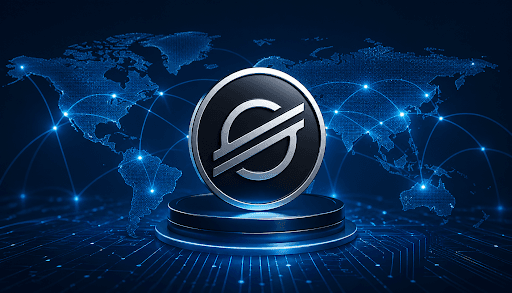
Stellar (XLM) is a decentralized blockchain network designed to support fast and affordable digital payments. It enables users to send and receive money across borders without relying on traditional financial institutions. The network connects individuals, payment systems, and financial organizations, making it easier to move value globally.
The main idea behind Stellar is to simplify international transfers. Traditional cross-border payments can be slow and expensive, often involving multiple intermediaries. Stellar removes many of these barriers by allowing transactions to settle within seconds and at very low cost. This makes it a practical solution for everyday transfers, especially in regions where access to banking services is limited.
What sets Stellar apart from many other cryptocurrencies is its strong focus on payments and financial accessibility. While some digital assets are primarily used as investments or stores of value, Stellar is built to function as a payment infrastructure. It is designed to handle currency exchanges and support transfers between different types of assets, including fiat currencies and digital tokens.
The native cryptocurrency of the network, XLM, plays an important role in keeping the system efficient. It is used to pay small transaction fees and helps facilitate exchanges between different currencies on the network. XLM also acts as a bridge asset, making it easier to convert one currency into another during transactions. This functionality supports the overall goal of creating a more open and accessible global financial system.
Using Cryptocurrency for Digital Purchases at Baxity Store
Baxity Store is a digital platform designed to make everyday online purchases more accessible through cryptocurrency. Instead of dealing directly with complex blockchain tools or exchanges, users can apply their digital assets in a simple and familiar way. The platform allows people to obtain products such as gift cards, prepaid cards, and gaming credits, making the process similar to traditional online shopping.
Baxity Store also provides a variety of crypto related cards and vouchers connected to widely used platforms and digital payment systems. These products help convert cryptocurrency into practical balances that can be used for subscriptions, entertainment services, and online payments. This makes it easier to integrate digital assets into daily spending without needing deep technical knowledge.
With instant delivery of digital codes and support for multiple crypto payment methods, Baxity Store simplifies the overall experience. It acts as a bridge between digital currencies and real world usage, allowing users to benefit from cryptocurrency in a straightforward and accessible way.
The History Behind Stellar
Stellar was launched in 2014 as a project focused on improving global payments and making financial systems more accessible. It was founded by Jed McCaleb and Joyce Kim, both of whom aimed to create a more open and inclusive financial network.
Before founding Stellar, Jed McCaleb was also involved in the creation of Ripple. However, differences in vision led to the development of a separate project. While Ripple focused more on working with banks and financial institutions, Stellar was designed to prioritize accessibility for individuals and underserved populations. The goal was to build a decentralized system that is not controlled by a single company.
To support the growth of the network, the Stellar Development Foundation was established. This non profit organization is responsible for guiding the development of the protocol, supporting partnerships, and promoting adoption of the Stellar ecosystem.
Over time, Stellar has gone through several important stages of development:
- 2014: Stellar network is launched by Jed McCaleb and Joyce Kim
- 2015: Introduction of Lumens (XLM) as the native asset of the network
- 2017: Growth in partnerships and increased attention from the crypto market
- 2019: Significant reduction in token supply to improve ecosystem efficiency
- 2020 and beyond: Expansion of use cases, including stablecoins and cross border payment solutions
These milestones reflect how Stellar has evolved from an early blockchain project into a widely recognized platform for fast and low cost global transactions.
How Does Stellar Work?
Stellar operates as a decentralized blockchain network designed to process transactions quickly and efficiently. Instead of relying on a central authority, it uses a distributed system of nodes that validate and record transactions on a shared ledger. This allows users to send value directly to each other, whether in the form of cryptocurrencies or tokenized versions of traditional currencies.
At the core of the network is the Stellar Consensus Protocol (SCP). This mechanism allows nodes to agree on the state of the blockchain without the need for mining. Unlike proof of work systems, SCP relies on a process called federated consensus, where trusted nodes form groups and validate transactions together. This approach improves speed and reduces energy consumption while maintaining network reliability.
One of the key advantages of Stellar is that it does not use mining. Transactions are confirmed through consensus rather than computational competition. This makes the network more efficient and helps keep transaction costs extremely low. As a result, payments can be processed in just a few seconds with minimal fees.
Another important component of the Stellar ecosystem is the use of “anchors.” Anchors act as bridges between traditional financial systems and the blockchain. They allow users to deposit fiat currency and receive a corresponding digital representation on the network. When a transaction is completed, anchors can also convert digital assets back into fiat currency, making cross-border transfers seamless.
Key Features of How Stellar Works
| Feature | Description |
|---|---|
| Blockchain structure | A decentralized ledger that records all transactions across the network |
| Consensus mechanism | Stellar Consensus Protocol (SCP) validates transactions without mining |
| Transaction speed | Transactions are typically confirmed within a few seconds |
| Fees | Very low transaction costs, usually a fraction of a cent |
| Mining | Not required, which reduces energy usage and complexity |
| Anchors | Intermediaries that connect fiat currencies with blockchain assets |
This combination of fast processing, low costs, and simple integration with traditional finance makes Stellar a practical solution for global payments and asset transfers.
What Makes Stellar Unique?
Stellar stands out in the cryptocurrency space because it is built specifically for payments and global value transfer. Its design focuses on speed, affordability, and accessibility, making it different from many other blockchain networks.
One of the main advantages of Stellar is its transaction speed. Payments on the network are typically completed within a few seconds. This makes it suitable for real time transfers, including cross border payments where traditional systems can take several days.
Another important feature is the low cost of transactions. Fees on the Stellar network are extremely small, often just a fraction of a cent. This allows users to send even very small amounts without worrying about high costs, which is especially useful for microtransactions and everyday payments.
Stellar also places a strong emphasis on financial inclusion. The network is designed to provide access to financial services for people who do not have access to traditional banking systems. By enabling simple and affordable transfers, Stellar helps connect users to the global economy regardless of their location.
In addition, Stellar supports multiple currencies and digital assets. Users can send, receive, and exchange different types of value on the same network. This includes fiat backed tokens, cryptocurrencies, and other digital representations of assets. The built in exchange functionality allows seamless conversion between currencies during transactions.
When compared to other payment focused blockchain networks, Stellar offers a balance of speed, cost efficiency, and accessibility. While some platforms focus on institutional use or complex smart contract functionality, Stellar remains focused on practical payments and user friendly financial tools. This clear focus makes it a strong option for global transfers and everyday financial interactions.
What Is Stellar (XLM) Used For?
The native asset of the Stellar network, XLM, plays a central role in keeping the system functional and efficient. It is not just a digital currency but also a key component that supports transactions and network operations.
One of the primary uses of XLM is paying transaction fees. Every operation on the Stellar network requires a very small fee, which helps prevent spam and ensures that the system remains secure and efficient. These fees are extremely low, making the network accessible for both large and small transactions.
XLM also functions as a bridge currency. When users want to exchange one currency for another, XLM can be used as an intermediary asset. This makes it easier and faster to convert between different currencies, especially when there is no direct trading pair available. By acting as a bridge, XLM improves liquidity and simplifies global transactions.
Another important function of XLM is maintaining a minimum balance for accounts. Each account on the Stellar network must hold a small amount of XLM. This requirement helps prevent the creation of large numbers of empty or spam accounts and contributes to the overall stability of the network.
In addition, XLM is widely used for transfers and currency exchanges. Users can send XLM directly to others anywhere in the world, often within seconds and at minimal cost. It is also used within the network to facilitate the exchange of different assets, including fiat backed tokens and other digital currencies. This makes XLM an essential part of Stellar’s goal to create a seamless and accessible global payment system.

Stellar Tokenomics
Stellar’s tokenomics define how XLM is created, distributed, and used within the network. The structure of supply and allocation is designed to support long term growth, network stability, and real world adoption.
Here are the key aspects of Stellar tokenomics:
- Total supply: Stellar originally launched with a total supply of 100 billion XLM. This large supply was intended to support global payments and widespread usage across different regions and use cases
- Token burn: In 2019, the Stellar Development Foundation reduced the total supply by burning approximately half of all tokens. This brought the total supply down to 50 billion XLM, making the asset more scarce and improving its overall structure
- Circulating supply: A significant portion of XLM is currently in circulation and actively used on the network. The remaining tokens are held and managed to support future development and ecosystem expansion
- Role of the foundation: The Stellar Development Foundation plays a key role in distributing XLM. It allocates tokens through partnerships, developer grants, and community programs. This helps encourage adoption and supports projects built on Stellar
- Ecosystem support: XLM is used to pay transaction fees, maintain account balances, and facilitate currency exchanges. These functions ensure that the network operates smoothly while preventing abuse and maintaining efficiency
Overall, Stellar’s tokenomics are designed to balance availability with utility. By combining a controlled supply with practical use cases, XLM supports the long term development of the Stellar ecosystem.
Real-World Use Cases of Stellar
Stellar is designed for practical use in real financial scenarios. Its speed, low costs, and ability to handle multiple currencies make it suitable for a wide range of applications across different regions and industries.
One of the most common use cases is international money transfers. Stellar allows users and businesses to send funds across borders quickly and at a very low cost. This is especially useful compared to traditional systems, which can be slow and expensive due to intermediaries and currency conversion fees.
The network is also well suited for micropayments. Because transaction fees are extremely low, Stellar makes it possible to send very small amounts of money efficiently. This opens up new opportunities for digital services, content platforms, and pay per use models that would not be practical with higher fees.
Stellar supports the growth of neobanks and fintech companies by providing infrastructure for fast and reliable payments. These organizations can use the network to build services such as digital wallets, remittance platforms, and cross border payment solutions without relying entirely on traditional banking systems.
Another important use case is the integration of stablecoins like USD Coin (USDC). By supporting fiat backed digital assets, Stellar enables users to transfer value that is tied to traditional currencies while still benefiting from blockchain efficiency. This helps reduce volatility and makes the network more practical for everyday transactions.
Stellar is also actively used in developing countries, where access to traditional financial services may be limited. Its low barriers to entry and minimal transaction costs make it easier for individuals to participate in the global economy. This supports financial inclusion and provides new opportunities for savings, payments, and business activities.
Stellar Ecosystem and Partnerships
Stellar has built a growing ecosystem through partnerships with financial institutions, fintech companies, and technology providers. These collaborations help expand the network’s real world usage and strengthen its position as a global payment infrastructure.
One of the key areas of development is partnerships with financial companies. Stellar works with banks, payment providers, and fintech platforms to improve cross border transactions and reduce costs. These partnerships allow businesses to use Stellar as a backend solution for fast and efficient money transfers.
The network is also integrated with various payment systems. This makes it easier to connect traditional financial services with blockchain based solutions. Through these integrations, users can move funds between bank accounts, digital wallets, and blockchain assets with fewer barriers. Anchors and service providers play an important role in enabling these connections.
A notable example of collaboration within the ecosystem is the integration of USD Coin (USDC). By supporting stablecoins, Stellar enables more predictable and stable transactions, which are important for both individuals and businesses. This strengthens its use as a payment network rather than just a cryptocurrency platform.
Stellar is also developing its decentralized finance ecosystem. While it is not as large as some other blockchain networks, it continues to grow with new tools and services. Developers can build applications for asset issuance, payments, and financial services directly on the network. This includes decentralized exchanges, tokenized assets, and new financial products.
Overall, Stellar’s ecosystem is focused on practical adoption. Its partnerships and integrations are aimed at making financial services more accessible, efficient, and connected on a global scale.
Advantages and Disadvantages of Stellar
Advantages
Stellar offers several benefits that make it attractive for payments and global transfers.
- Fast transactions: Payments on the network are usually completed within a few seconds. This makes Stellar suitable for real time transfers and everyday use
- Low fees: Transaction costs are extremely small, often just a fraction of a cent. This allows users to send both large and very small amounts efficiently
- Ease of use: The network is designed with simplicity in mind. Its structure makes it easier for users and businesses to send money, exchange currencies, and integrate payment solutions
Disadvantages
Despite its strengths, Stellar also has some limitations that users should consider.
- Limited adoption compared to major cryptocurrencies: Stellar is less widely used than leading assets like Bitcoin and Ethereum. This can affect liquidity and overall visibility
- Dependence on adoption: The long term success of Stellar depends on how widely the network is used by businesses and individuals. Without strong adoption, its impact may remain limited
- Competition: Stellar faces strong competition from other blockchain networks focused on payments and financial services. These include both established platforms and newer projects offering similar features
Overall, Stellar provides a solid solution for fast and low cost payments, but its future growth depends on broader adoption and its ability to compete in a rapidly evolving market.
How to Buy Stellar (XLM)
Buying Stellar (XLM) is a straightforward process that can be completed in a few simple steps. While the exact flow may vary depending on the platform you choose, the overall process remains similar.
The first step is choosing a reliable platform. Look for a service that offers clear pricing, secure transactions, and support for your preferred payment methods. It is important to select a platform that is easy to use, especially if you are new to cryptocurrency.
Next, you need to create an account. This usually involves providing your email address and setting a secure password. Most platforms also require identity verification to comply with regulations. This step may include uploading identification documents and confirming your personal details.
After your account is verified, you can add a payment method. Common options include bank cards, bank transfers, and sometimes alternative payment solutions. Make sure your selected method is supported and that you understand any associated fees.
Once your account is funded, you can proceed to buy XLM. Enter the amount you want to purchase, review the transaction details, and confirm the payment. The purchased XLM will then be credited to your account on the platform.
Finally, you should consider how to store your XLM. You can keep it on the platform for convenience or transfer it to a personal wallet for additional security. Wallets can be mobile, desktop, or hardware based, depending on your preferences and level of experience. Proper storage helps protect your assets and gives you more control over your funds.
Is Stellar a Good Investment?
Stellar (XLM) is often considered by users who are exploring cryptocurrencies, but it is important to approach this topic carefully. This section is not financial advice. It is an overview of key factors that can influence how people evaluate XLM as an asset.
Like most cryptocurrencies, XLM is subject to volatility. Its price can change significantly over short periods of time due to market trends, investor sentiment, and broader economic conditions. This makes it important for users to understand the risks before making any decisions.
Another key factor is adoption. The value and long term potential of Stellar are closely linked to how widely the network is used. If more businesses, payment providers, and users adopt Stellar for real transactions, demand for XLM may increase. At the same time, limited adoption can slow its growth.
Stellar also plays a specific role within the broader cryptocurrency ecosystem. Unlike assets that are mainly seen as stores of value, Stellar focuses on payments and financial infrastructure. Its success depends on its ability to remain relevant as a solution for fast and low cost transfers in a competitive market.
Overall, Stellar may appeal to those who are interested in the future of digital payments and financial accessibility. However, as with any cryptocurrency, it is important to consider both the opportunities and the risks before getting involved.
Conclusion
Stellar (XLM) is a blockchain network built to make global payments faster, cheaper, and more accessible. It focuses on practical use cases such as cross border transfers, currency exchange, and financial inclusion. With its low fees and fast transaction speed, Stellar offers a solution that addresses many of the limitations of traditional payment systems.
The network is especially suitable for individuals and businesses that need efficient international transfers or want to access digital financial tools without relying heavily on traditional banks. It can also be useful for fintech companies, developers, and organizations working on payment solutions or serving regions with limited banking infrastructure.
Looking ahead, Stellar has the potential to play an important role in the future of digital payments. As the demand for fast and low cost financial services continues to grow, networks like Stellar may become a key part of the global financial system. Its focus on accessibility and real world usability positions it as a strong option in the evolving landscape of digital finance.
FAQ About Stellar (XLM)
What makes Stellar different from traditional payment systems?
Stellar operates without relying on centralized institutions such as banks or payment processors. This allows transactions to be processed directly between users without multiple intermediaries. As a result, payments can be faster and more predictable compared to traditional systems. Another difference is accessibility, since anyone with an internet connection can use the network. Stellar also supports the transfer of multiple types of assets, not just one currency. This flexibility makes it suitable for a wide range of financial use cases beyond simple money transfers.
Can Stellar be used for business payments?
Yes, Stellar can be used by businesses for various types of payments, including international transfers and supplier settlements. Companies can integrate Stellar into their payment infrastructure to reduce transaction costs. This is especially useful for businesses operating across different countries and currencies. The network also supports issuing custom tokens, which can represent assets or credits within a business ecosystem. In addition, transactions are transparent and traceable on the blockchain, which can improve financial reporting. These features make Stellar a practical option for modern payment solutions.
Is Stellar suitable for beginners in crypto?
Stellar is often considered beginner friendly due to its simple structure and low transaction costs. Users do not need advanced technical knowledge to send or receive payments on the network. Many wallets and platforms offer intuitive interfaces that make it easier to interact with XLM. The low fees also reduce the risk of losing significant funds during experimentation. In addition, the network’s focus on payments makes its purpose easier to understand compared to more complex blockchain platforms. This makes Stellar a good starting point for those new to cryptocurrency.
How secure is the Stellar network?
Stellar uses a decentralized network of nodes to validate transactions and maintain the ledger. This reduces the risk of a single point of failure and improves overall reliability. The consensus mechanism is designed to prevent malicious activity while maintaining fast processing times. Security also depends on how users manage their private keys and wallets. If proper precautions are taken, such as using secure storage and strong authentication, risks can be minimized. Like any digital system, users should stay informed and follow best practices to protect their assets.
What types of assets can be used on Stellar?
Stellar supports a wide range of assets beyond its native token XLM. These can include digital representations of fiat currencies, stablecoins, and even custom tokens issued by organizations. This allows users to hold and transfer different types of value on the same network. Asset issuers can define rules and conditions for how their tokens are used. The built in exchange functionality makes it possible to convert between assets quickly. This flexibility is one of the reasons Stellar is used in various financial applications.
How does Stellar support financial inclusion?
Stellar aims to provide access to financial services for people who are underserved by traditional banking systems. Its low fees make it affordable to send and receive even small amounts of money. The network does not require users to have a bank account, which lowers entry barriers. This is particularly important in regions where banking infrastructure is limited. Stellar also enables cross border payments, helping users participate in the global economy. By reducing costs and complexity, it creates more opportunities for individuals and small businesses.

Comments
Sign in to join the conversation. Every comment is reviewed before it appears on the page.
Sign in to comment
You need an account to leave a comment. Sign in and your name will be used automatically.
No comments yet. Be the first to write one.