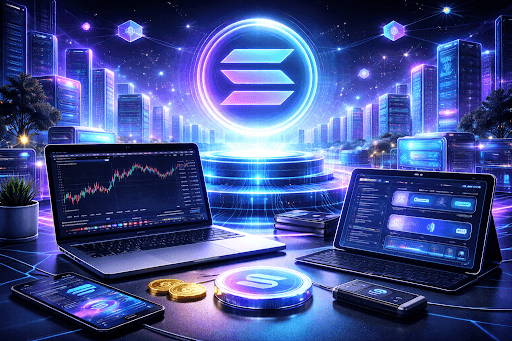
Solana is a high performance blockchain designed to support fast, secure, and low cost digital transactions. It serves as a decentralized network where users can transfer value, build applications, trade assets, and interact with decentralized services without relying on traditional financial intermediaries. Like other major cryptocurrencies, Solana operates on a distributed ledger, but it was built with a strong focus on scalability and speed from the very beginning. Solana was founded in 2017 by Anatoly Yakovenko, a former Qualcomm engineer. The network officially launched its mainnet in 2020. Yakovenko and his team aimed to solve one of the biggest challenges in blockchain technology: how to process thousands of transactions per second without increasing costs. Their solution introduced an innovative time keeping mechanism that significantly improves transaction efficiency. The native cryptocurrency of the network is Solana, commonly known by its ticker symbol SOL. SOL is used to pay transaction fees, interact with smart contracts, and participate in staking to help secure the network. Solana is often described as one of the fastest blockchain networks because it can handle thousands of transactions per second with extremely low fees, often just a fraction of a cent. This combination of speed, affordability, and scalability has made Solana a popular choice for developers, traders, and everyday users.
Using Cryptocurrency for Digital Purchases at Baxity Store
Baxity Store is a digital marketplace designed to make everyday online purchases more accessible through cryptocurrency payments. Instead of navigating complex blockchain tools or converting assets through multiple platforms, users can pay with crypto and receive practical digital products. These include gift cards, prepaid cards, gaming credits, and other digital vouchers that function similarly to traditional online purchases. This model allows cryptocurrency holders to use their digital assets in a familiar shopping format. After completing a crypto payment, customers receive digital codes that can be redeemed on well known online platforms. Instant delivery ensures that purchases can be used almost immediately, which makes the process efficient and user friendly. Baxity Store also offers a variety of crypto related cards and vouchers linked to major digital services and payment ecosystems. These products make it possible to convert cryptocurrency value into balances for subscriptions, entertainment services, and everyday online spending. With support for multiple crypto payment options, the platform serves as a practical bridge between digital assets and real world digital commerce, while keeping the experience simple and accessible.
The History of Solana
The Solana project was founded in 2017 by Anatoly Yakovenko. Before creating Solana, Yakovenko worked as a software engineer at Qualcomm, where he specialized in distributed systems and compression algorithms. He identified a major limitation in existing blockchains: they struggled to scale without sacrificing speed or decentralization. His idea was to introduce a cryptographic clock that would allow the network to order transactions more efficiently. To bring this vision to life, Yakovenko co founded Solana Labs together with former colleagues from Qualcomm, Intel, and Dropbox. Solana Labs became the core development company behind the network, responsible for building the protocol, improving performance, and expanding the ecosystem. Solana officially launched its mainnet beta in March 2020. From that point forward, the network began attracting developers, investors, and early users who were interested in its high throughput and low transaction costs. Key Milestones in Solana’s Development:
- 2017 – Project founded and initial whitepaper introducing Proof of History
- 2018 – Early testnets launched to demonstrate performance capabilities
- March 2020 – Mainnet beta goes live
- 2021 – Rapid ecosystem expansion with hundreds of decentralized applications
- 2022 to 2024 – Continued upgrades, infrastructure improvements, and growing institutional interest
Solana experienced especially rapid growth during the boom of decentralized finance and non fungible tokens in 2021. DeFi protocols chose Solana for its low fees and high transaction speed, which made trading and liquidity provision more efficient. At the same time, NFT projects and marketplaces gained traction because minting and transferring digital collectibles on Solana was significantly cheaper than on many competing blockchains. This surge in activity helped establish Solana as one of the leading smart contract platforms in the crypto industry.
How Does Solana Work?
Solana operates using a combination of Proof of History and Proof of Stake, which together enable high speed processing and low transaction costs. Proof of History, or PoH, is a cryptographic mechanism that creates a verifiable timeline of events on the blockchain. It works as a decentralized clock that timestamps transactions before they are finalized. This reduces the need for validators to constantly communicate about transaction order. As a result, the network can process transactions more efficiently. Unlike Proof of Work, which depends on energy intensive mining, or traditional Proof of Stake systems that focus only on consensus, Solana adds a time sequencing layer that improves scalability. At the same time, Solana relies on Proof of Stake to secure the network. Users can stake SOL by delegating tokens to validators. Validators process transactions, produce blocks, and maintain the blockchain. In exchange, they earn rewards that are shared with delegators. Security is supported by economic incentives, since validators must lock up SOL as collateral and risk penalties if they act dishonestly.
| Feature | Solana |
|---|---|
| Consensus Model | Proof of History (PoH) + Proof of Stake (PoS) |
| Transactions Per Second | 2,000–5,000 (Sustained); Up to 1M+ (Firedancer peak) |
| Average Fee | $0.00025 – $0.0008 (Sub-cent) |
| Confirmation Time | ~400ms (Finality ~150ms with Alpenglow) |
| Energy Consumption | ~0.00051 kWh per transaction (Net-Zero) |
Thanks to this design, Solana is able to support real time applications such as trading platforms, payment services, gaming ecosystems, and NFT marketplaces. Its architecture is built to balance speed, cost efficiency, and network security while maintaining decentralized validation.
What Makes Solana Different From Other Cryptocurrencies?
Solana is frequently compared to Bitcoin and Ethereum, two of the most established cryptocurrencies in the market. While all three rely on blockchain technology, their design priorities and use cases differ significantly. Compared to Bitcoin, Solana offers much higher transaction speed. Bitcoin processes roughly seven transactions per second, while Solana can handle thousands under normal network conditions. Fees also differ. Bitcoin transaction costs can rise during periods of congestion, whereas Solana fees typically remain a fraction of a cent. In terms of purpose, Bitcoin was created primarily as a decentralized digital currency and store of value. Solana was designed as a platform for smart contracts and decentralized applications, focusing on scalability and real time performance. When compared to Ethereum, the differences center on scalability, fees, and ecosystem structure. Ethereum supports a large and mature ecosystem of decentralized applications, including DeFi protocols and NFT platforms. However, it has historically experienced higher transaction fees during peak usage. Solana emphasizes base layer scalability, enabling higher throughput without relying heavily on additional scaling solutions. Its consistently low fees make it attractive for applications such as trading, gaming, and microtransactions. While Ethereum remains the largest smart contract ecosystem, Solana has positioned itself as a high performance alternative built for speed and cost efficiency.
What Is SOL Used For?
Solana, known by its ticker SOL, plays several important roles within the Solana ecosystem. It is not only a tradable digital asset but also a utility token that powers network activity. Here are the main ways SOL is used:
- Paying transaction fees. Every transaction on the Solana network requires a small fee paid in SOL. This includes token transfers, smart contract interactions, NFT minting, and DeFi operations. Fees are typically very low, which makes frequent transactions practical.
- Staking and earning rewards. SOL holders can delegate their tokens to validators to support network security. In return, they receive staking rewards. Earnings depend on network conditions and validator performance. However, staking also involves risks such as price volatility and potential validator penalties.
- DeFi applications. SOL is widely used in decentralized finance. Users can lend their assets to earn interest, trade tokens on decentralized exchanges, and provide liquidity to earn a share of platform fees. Low transaction costs make these activities more accessible compared to higher fee networks.
- NFTs and gaming. SOL is used to buy, sell, and mint non fungible tokens on Solana based marketplaces. It also powers blockchain games where players purchase digital items, trade assets, or participate in in game economies.
- Payments and transfers. SOL can be sent globally within seconds, making it suitable for international transfers. Its low fees enable microtransactions, such as small tips or digital content payments. Some online services and digital platforms accept SOL as a payment method, and it can also be used indirectly in crypto related purchases such as digital gift cards and online vouchers.
Because of these diverse use cases, SOL functions both as a network utility token and as a digital asset with practical real world applications.
Advantages of Solana
Solana has gained attention in the crypto industry because of several technical and ecosystem advantages that distinguish it from many other networks. One of its main strengths is high transaction speed. Solana is capable of processing thousands of transactions per second under normal conditions. This performance makes it suitable for applications that require real time execution, such as trading platforms, payment services, and blockchain games. Another major advantage is low transaction fees. Fees on Solana are typically a fraction of a cent, which allows users to transfer funds, trade assets, or interact with decentralized applications without worrying about high costs. Low fees also make microtransactions and frequent activity economically viable. Scalability is another important benefit. Solana was designed to handle growing demand without significantly increasing fees or slowing down the network. Its architecture focuses on maintaining high throughput directly on the base layer, which supports long term ecosystem growth. Finally, Solana benefits from an active and expanding developer community. Hundreds of projects have been built on the network, including DeFi platforms, NFT marketplaces, gaming applications, and infrastructure tools. This growing ecosystem strengthens innovation and increases the overall utility of the network.
Risks and Challenges of Solana
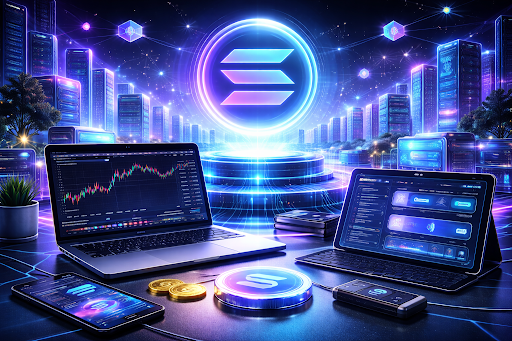
Like any cryptocurrency, Solana involves risks and challenges that users and investors should carefully consider. One of the primary risks is price volatility. The value of SOL can fluctuate significantly over short periods of time due to market sentiment, macroeconomic trends, or changes in the broader crypto industry. This volatility can create opportunities, but it also increases financial risk for traders and long term holders. Another challenge is strong competition among blockchain platforms. Networks such as Ethereum, BNB, and other smart contract platforms continue to improve scalability and reduce fees. As the industry evolves, Solana must continue innovating to maintain its position and attract developers and users. Solana has also experienced periods of network congestion and temporary outages in the past. High transaction volumes and technical issues have occasionally disrupted normal operations. While upgrades and infrastructure improvements have been implemented, network reliability remains an important factor for adoption. Finally, regulatory uncertainty represents an ongoing risk. Cryptocurrency regulations vary by country and can change over time. New laws or restrictions affecting digital assets, staking, or decentralized finance could influence how SOL is used and traded in certain regions. For this reason, users should stay informed about local legal frameworks before investing or participating in blockchain activities.
Is Solana a Good Investment?
Whether Solana is a good investment depends on individual financial goals, risk tolerance, and market conditions. Like all digital assets, SOL is influenced by multiple economic and industry factors. Key considerations include:
- Price drivers. The value of SOL is affected by overall crypto market trends, investor sentiment, network adoption, technological upgrades, and macroeconomic factors. News related to regulation or major partnerships can also impact short term price movements.
- Market capitalization. Solana is consistently ranked among the largest cryptocurrencies by market cap. A higher market capitalization often suggests stronger liquidity and broader recognition, but it does not eliminate volatility or risk.
- Growth potential. Solana’s focus on speed and low transaction costs has attracted developers and businesses. Continued ecosystem expansion in areas such as DeFi, NFTs, gaming, and payments may contribute to long term growth. However, competition from other smart contract platforms remains strong.
- DYOR. Doing your own research is essential before investing in any cryptocurrency. Investors should review project fundamentals, tokenomics, roadmap updates, and market conditions. Diversification and responsible risk management are also important when dealing with volatile assets.
As with any investment, there are no guarantees of profit, and potential returns always come with corresponding risks.
How to Buy Solana (SOL)
Solana can be purchased through several common methods, depending on your location, payment preferences, and experience level. One of the most popular ways is through centralized cryptocurrency exchanges such as Binance or Coinbase. Users create an account, complete identity verification if required, deposit funds using bank transfer or card payment, and place an order to buy SOL. Exchanges typically offer high liquidity and user friendly interfaces, which makes them suitable for beginners. Another option is peer to peer platforms. P2P trading allows users to buy SOL directly from other individuals. Payment methods may include bank transfers, digital wallets, or other local payment solutions. While P2P offers flexibility, it is important to use trusted platforms with escrow protection to reduce counterparty risk. Some users also buy SOL through crypto exchange services or online exchangers that allow quick swaps between different cryptocurrencies or fiat and crypto. These services often require minimal setup but may charge higher fees compared to major exchanges. After purchasing SOL, storing it securely is essential. Users can keep their tokens on the exchange, but this means the platform controls the private keys. For greater control and security, many users transfer SOL to a personal wallet. Options include software wallets, mobile wallets, or hardware wallets that store private keys offline. Choosing the right storage method depends on how frequently you plan to trade and your security preferences.
How to Store SOL Safely
Storing Solana securely is essential for protecting your funds. The right storage method depends on how often you use your tokens and your preferred level of security. Hardware wallets are considered one of the safest options. These are physical devices that store private keys offline, reducing the risk of hacking or malware. Because they are not constantly connected to the internet, hardware wallets are suitable for long term storage and larger balances. However, users must keep the recovery phrase safe, since losing it can result in permanent loss of access. Software wallets are applications that run on mobile devices or computers. They are convenient for everyday use, quick transfers, and interacting with decentralized applications. While software wallets are generally secure when used properly, they remain connected to the internet, which makes device security and safe browsing practices especially important. When choosing a wallet, it is also important to understand the difference between custodial and non custodial solutions. In a custodial wallet, a third party such as a crypto exchange controls the private keys on your behalf. This can be convenient but requires trust in the platform. In a non custodial wallet, you control your private keys directly. This provides greater independence and control, but it also means you are fully responsible for safeguarding your access credentials. Selecting the appropriate storage method helps reduce risk and ensures that your SOL remains protected over time.
Final Thoughts: The Future of Solana
Solana has positioned itself as one of the most performance focused blockchain networks in the industry. Its long term prospects depend on continued technical stability, ecosystem growth, and adoption by developers and businesses. If the network maintains reliability while expanding its infrastructure, it may strengthen its role among leading smart contract platforms. In the broader Web3 landscape, Solana plays an important role as a foundation for decentralized applications. Its architecture supports decentralized finance, digital collectibles, gaming platforms, and payment solutions. As Web3 evolves toward more user friendly and scalable systems, networks that combine speed with low costs may gain further relevance. Solana is also well suited for everyday transactions. Fast confirmation times and minimal fees make it practical for transfers, online payments, and microtransactions. While volatility and regulatory uncertainty remain factors to consider, the network’s design makes it technically capable of supporting real world usage beyond speculative trading. Overall, the future of Solana will depend on innovation, adoption, and the broader direction of the cryptocurrency market.
Solana (SOL) FAQ: Common Questions About the Network and Its Use
Is Solana suitable for building large scale applications?
Solana is designed to support high throughput applications that require fast execution and low latency. Its architecture allows developers to build platforms that can handle large numbers of users without significantly increasing transaction costs. This makes it attractive for financial platforms, trading systems, and interactive services. Developers can use programming languages such as Rust to create smart contracts tailored to specific use cases. However, building large scale applications still requires proper infrastructure planning and optimization. Technical performance depends not only on the blockchain itself but also on how the application is designed and maintained.
What makes Solana attractive for developers compared to other blockchains?
One advantage is the ability to process a high number of transactions without relying heavily on secondary scaling layers. Developers can deploy smart contracts directly on the base network and benefit from relatively predictable fees. The ecosystem also offers developer tools, documentation, and community support that simplify the onboarding process. Solana’s architecture supports composability, which means different applications can interact with each other within the same network. This creates opportunities for innovation across finance, gaming, and digital asset management. Still, developers must evaluate whether Solana’s design aligns with the specific needs of their projects.
How decentralized is the Solana network?
Solana relies on a distributed network of validators located in different regions around the world. These validators are responsible for processing transactions and maintaining consensus. While the network aims to be decentralized, discussions continue within the crypto community about validator distribution and hardware requirements. Running a validator node may require more technical resources compared to some other networks. This can influence participation levels and decentralization metrics. As the ecosystem grows, ongoing improvements and governance decisions may impact how decentralization evolves.
Can businesses integrate Solana into payment systems?
Businesses can integrate Solana based payment solutions through wallets, APIs, and third party service providers. Because transaction fees are low and confirmation times are short, it can support digital commerce models that rely on quick settlements. Companies operating in global markets may find blockchain based payments useful for cross border transfers. Integration typically requires technical development or partnerships with crypto payment processors. Regulatory compliance and accounting practices must also be considered before adoption. Businesses should assess legal requirements in their jurisdictions prior to implementation.
What factors could influence Solana’s long term adoption?
Long term adoption depends on technical stability, developer engagement, and real world use cases. Consistent network performance is essential for maintaining user trust. The growth of decentralized applications, institutional partnerships, and payment integrations can also contribute to expansion. Competition from other smart contract platforms may affect market share and innovation speed. Regulatory developments in major economies could shape how easily users and companies interact with the network. Market conditions and investor confidence also play a significant role in determining the pace of adoption.
Is Solana environmentally sustainable?
Solana uses a Proof of Stake based system, which consumes significantly less energy than Proof of Work networks. Because it does not rely on energy intensive mining, its overall power consumption is relatively low compared to older blockchain models. Validator operations still require hardware and electricity, but energy demands are generally lower than traditional mining systems. Environmental impact can vary depending on the energy sources used by validators in different regions. As sustainability becomes a more important topic in technology, energy efficiency may influence adoption decisions. Users who prioritize environmental considerations often evaluate consensus mechanisms before choosing a network.

Comments
Sign in to join the conversation. Every comment is reviewed before it appears on the page.
Sign in to comment
You need an account to leave a comment. Sign in and your name will be used automatically.
DanH_crypto
Heard people say solana is super fast all the time, but the part about proof of history actually helped me get why. didnt know it basically works like some kind of crypto clock for transactions. Kinda different from most other blockchains tbh.
Baxity
Exactly! Viewing Proof of History (PoH) as a "crypto clock" is the best way to understand Solana’s speed. By time-stamping transactions before they even reach the validators, Solana avoids the "waiting in line" typical of other blockchains. It’s why it can handle thousands of transactions per second while others are still syncing their watches.
OliReed21
the section about defi, nfts and gaming on solana was pretty useful. most of the time people just talk about the price of SOL. didnt realize there are already that many apps running on the network. pretty interesting ecosystem actually.
Baxity
Exactly! It’s easy to get distracted by the SOL price tickers, but the real story is the infrastructure. Solana has quietly become a massive hub for 'high-velocity' apps because its fees are usually a fraction of a cent. It’s not just a few experimental projects anymore either—you have 'Super Apps' like Jupiter handling billions in volume, massive NFT communities like Mad Lads, and even real-world projects like Helium or Hivemapper that use the blockchain to power physical hardware networks. When you realize people are actually using the network for everything from 3D rendering (Render Network) to fitness (StepN), the long-term potential starts to look much more solid than just speculative trading.