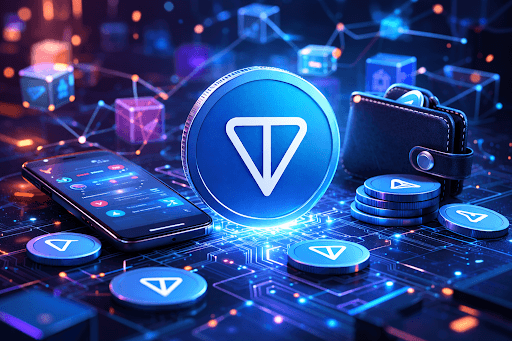
Toncoin (TON) is the native cryptocurrency of The Open Network, a blockchain platform designed to support fast transactions, decentralized applications, and large scale Web3 services. The project originally emerged from an initiative connected to the popular messaging platform Telegram, which sought to combine blockchain technology with its global user base. Today, Toncoin serves as the core digital asset that powers transactions, smart contracts, and various services within the TON ecosystem.
The idea behind The Open Network was to create a highly scalable blockchain capable of handling millions of users while maintaining low fees and fast transaction processing. Toncoin plays a central role in this system. It is used to pay network transaction fees, participate in staking and validation, and support decentralized applications built on the TON blockchain.
One of the reasons Toncoin has gained significant attention in the cryptocurrency industry is its strong connection to Telegram. The messaging platform has hundreds of millions of users worldwide, and its integration with TON-related services has opened new opportunities for bringing blockchain technology to a broader audience. Features such as built in wallets, crypto transfers between users, and Telegram based applications have helped make TON one of the most visible blockchain ecosystems connected to a major social platform.
As interest in Web3 technologies continues to grow, Toncoin is increasingly viewed as a project that aims to bridge traditional online platforms with decentralized financial and digital services. Its combination of scalable blockchain infrastructure and potential access to a massive global user base has positioned TON as one of the notable projects in the evolving cryptocurrency landscape.
Using Cryptocurrency for Digital Purchases at Baxity Store
Baxity Store is a digital marketplace designed to make everyday online purchases more accessible for people who use cryptocurrency. Instead of dealing directly with complex blockchain tools or conversion processes, users can spend digital assets in a more familiar way by purchasing digital products such as gift cards, prepaid vouchers, and gaming credits. This model allows cryptocurrencies to function as a practical payment method that fits naturally into the online shopping experience.
The platform offers a wide selection of digital products connected to well known services, entertainment platforms, and payment ecosystems. By purchasing digital vouchers or prepaid cards, users can convert cryptocurrency into balances that can be used for subscriptions, online services, digital entertainment, or other everyday purchases. This approach simplifies the process of turning digital assets into something that can be used across a wide range of online platforms.
Another advantage of Baxity Store is the speed and convenience of the purchasing process. After completing a payment with supported cryptocurrencies, customers typically receive their digital codes almost instantly. This immediate delivery makes it possible to access services or activate balances without waiting for long processing times. Support for multiple crypto payment options also gives users flexibility when choosing how they want to complete their purchases.
By combining cryptocurrency payments with familiar digital products, Baxity Store helps bridge the gap between blockchain technology and everyday online spending. Users can access a wide range of digital goods while avoiding unnecessary technical complexity, making the experience closer to traditional e commerce while still benefiting from the flexibility of cryptocurrency payments.
The Origins of Toncoin and the TON Blockchain
The history of Toncoin is closely connected with the ambition to create a blockchain platform that could serve hundreds of millions of users. The project began as an initiative related to Telegram, one of the world’s most popular messaging applications. The goal was to build a decentralized infrastructure that could support digital payments, smart contracts, and new types of online services integrated with a global communication platform.
The idea of launching a blockchain network originated with Telegram’s founders, Pavel and Nikolai Durov. They envisioned a system that could combine fast messaging with decentralized technology, making it possible for users to send digital payments as easily as they send messages. This concept eventually led to the development of the Telegram Open Network, often referred to as TON.
Telegram Open Network was designed to address some of the key limitations of early blockchain systems, such as low transaction throughput and high fees. The network architecture aimed to support a large number of transactions while remaining secure and decentralized. To fund the development of the project, Telegram conducted a large private token sale in 2018, raising significant investment from global participants.
However, the project soon faced regulatory challenges. In 2019, legal action from the United States Securities and Exchange Commission questioned the structure of the token offering. As a result of the legal dispute, Telegram decided to discontinue its direct involvement in the project in 2020 and return funds to investors.
Despite this setback, the technology and open source code behind the project continued to attract interest from developers and blockchain enthusiasts. The community began developing the network independently, leading to the emergence of The Open Network as a decentralized blockchain ecosystem. Over time, Toncoin became the native cryptocurrency used to power the network.
The early development of TON can be summarized through several key milestones:
- Telegram’s idea to create a scalable blockchain platform integrated with its messaging ecosystem
- Development of the Telegram Open Network and its native cryptocurrency Toncoin
- Contributions of Pavel and Nikolai Durov to the initial concept and technical vision
- Telegram’s withdrawal from the project after regulatory pressure in 2020
- Formation of the independent TON Foundation and continued development by the community
Today, The Open Network operates as a decentralized project supported by developers, validators, and organizations around the world. Although Telegram is no longer directly responsible for the network, the original vision of combining blockchain technology with large scale online communication continues to influence the growth of the TON ecosystem.
What Is The Open Network (TON)?
The Open Network, commonly known as TON, is a decentralized blockchain platform designed to support fast digital transactions, smart contracts, and a wide range of Web3 applications. The network was originally conceived as a highly scalable infrastructure that could serve millions of users while maintaining efficiency and low transaction costs. Today, TON operates as an independent blockchain ecosystem supported by developers, validators, and community organizations.
The main purpose of The Open Network is to provide a foundation for decentralized services such as payments, financial applications, digital asset platforms, and online tools integrated with messaging and social platforms. The architecture of the network was designed with scalability in mind, allowing it to process large volumes of transactions without significant delays.
Toncoin is the native cryptocurrency of the TON blockchain. It plays a central role in the operation of the network and is used for several important functions. Users pay transaction fees with Toncoin, validators stake the token to help secure the network, and developers rely on it to power applications and smart contracts built on the platform. In addition, Toncoin is often used within services and applications that operate inside the TON ecosystem.
The blockchain also aims to solve several common challenges found in earlier blockchain networks. These challenges include slow transaction processing, limited scalability, and high network fees. By introducing a flexible architecture and advanced routing mechanisms, TON is designed to maintain high performance even as the number of users and applications grows.
The following table highlights some of the key components of The Open Network and their roles within the ecosystem.
| Component | Description |
|---|---|
| TON Blockchain | The decentralized network that processes transactions and supports applications |
| Toncoin (TON) | The native cryptocurrency used for fees, staking, and payments |
| Validators | Network participants responsible for verifying transactions and maintaining security |
| Smart Contracts | Programs that run automatically on the blockchain and enable decentralized services |
| TON Ecosystem | A growing collection of decentralized applications, financial tools, and digital services |
Compared with many earlier blockchain networks, TON was designed with a stronger focus on scalability and integration with large digital platforms. Its architecture allows the network to adapt to increasing demand, which makes it suitable for applications that require frequent transactions and real time interactions.
Because of these features, The Open Network is often viewed as a blockchain that aims to connect traditional online services with decentralized technologies. The presence of Toncoin as the core digital asset allows the network to operate efficiently while supporting a broad ecosystem of developers, users, and digital applications.

How the TON Blockchain Works
The TON blockchain was designed to support large scale digital services while maintaining high speed and efficiency. Its architecture focuses on solving some of the common limitations seen in earlier blockchain systems, such as network congestion and slow transaction processing. By combining scalable infrastructure with a flexible design, TON aims to handle a large number of users and applications without compromising performance.
One of the key elements of the TON blockchain is its multi layer architecture. Instead of relying on a single chain that processes all transactions, the network is structured in a way that allows different parts of the system to operate simultaneously. This approach helps distribute network activity and improves the overall efficiency of the platform.
Scalability is achieved through a mechanism known as sharding. In this system, the blockchain can divide the workload across multiple segments, called shards, which process transactions in parallel. As network activity increases, the system can create additional shards to handle the load. This dynamic structure allows the network to maintain stable performance even during periods of high demand.
Transactions on the TON blockchain are processed through a series of steps that involve validation and confirmation by network participants. When a transaction is initiated, it is broadcast to the network and verified by validators. These validators are responsible for confirming the accuracy of transactions, maintaining the integrity of the blockchain, and producing new blocks that are added to the chain.
Validators play an essential role in the security and reliability of the network. They stake Toncoin as part of the consensus process and participate in validating blocks. This staking mechanism helps align the interests of validators with the health of the network, as malicious behavior can result in financial penalties.
Several technical characteristics contribute to the performance of the TON blockchain:
- dynamic sharding
- high transaction throughput
- low transaction fees
- fast block finality
Together, these features allow the network to support a wide range of decentralized applications, financial services, and digital platforms. The combination of scalability, efficient transaction processing, and validator participation makes TON a blockchain that is designed for large scale adoption and real world usage.
TON Consensus Mechanism
The TON blockchain relies on a consensus mechanism that allows thousands of network participants to agree on the state of the ledger. Consensus is essential for any decentralized system because it ensures that all nodes in the network share the same record of transactions without relying on a central authority.
The network uses a Proof of Stake model to maintain security and validate new blocks. In this system, participants known as validators lock a certain amount of Toncoin as collateral in order to take part in block production. By staking tokens, validators demonstrate their commitment to the network and gain the opportunity to verify transactions and add new blocks to the blockchain.
Validators play a central role in the operation of the TON network. They are responsible for checking incoming transactions, confirming that they follow the rules of the protocol, and producing blocks that include verified transactions. Once a block is created, it is shared with the rest of the network so that other nodes can update their copy of the blockchain.
Security in the TON network is closely connected to the staking mechanism. Because validators must deposit Toncoin to participate, they have a financial incentive to behave honestly. If a validator attempts to manipulate transactions or violate the protocol rules, the network can penalize that participant by reducing or confiscating part of the staked tokens. This system helps maintain trust and discourages malicious activity.
Transaction confirmation also relies on cooperation between validators. When a new block is proposed, other validators verify its validity before it becomes part of the blockchain. After the block is accepted by the network, the transactions included in it are considered confirmed. This process allows the TON blockchain to maintain a reliable and transparent record of activity while remaining decentralized.
Through the combination of Proof of Stake, validator participation, and network level verification, the TON consensus mechanism provides a balance between efficiency, security, and scalability. This structure helps ensure that transactions are processed quickly while maintaining the integrity of the blockchain.
The TON Virtual Machine (TVM) and Smart Contracts
A key component of The Open Network is the TON Virtual Machine, often referred to as TVM. This virtual machine is the environment where smart contracts are executed on the TON blockchain. It acts as the computational layer of the network, processing instructions and ensuring that decentralized applications operate according to predefined rules.
The TON Virtual Machine is designed to handle complex smart contract logic while maintaining efficiency and security. When a smart contract is deployed on the network, its code is processed and executed by the TVM. Every node in the network can verify the results of these operations, which helps maintain consistency across the blockchain.
Smart contracts are self executing programs stored on the blockchain. They automatically perform actions when certain conditions are met. For example, a smart contract can transfer digital assets between users, manage decentralized financial services, or control the distribution of tokens within an application. Because these contracts run on the blockchain, their execution is transparent and cannot be altered once deployed.
In the TON ecosystem, smart contracts play a central role in enabling decentralized services. Developers can create applications that operate without centralized control, allowing users to interact directly with blockchain based systems. These applications can range from financial platforms and digital marketplaces to gaming projects and community driven services.
The TON Virtual Machine provides developers with a flexible environment for building such applications. It supports specialized programming tools and languages that allow developers to create efficient and scalable smart contracts. The design of the TVM also focuses on performance, which helps applications handle a large number of interactions without slowing down the network.
Using these tools, developers can build decentralized applications, commonly known as dApps, on the TON blockchain. These dApps operate through smart contracts that manage their core functions. As the TON ecosystem continues to grow, the TVM plays an essential role in supporting new services, digital products, and Web3 platforms built on the network.
The Toncoin Ecosystem
The TON ecosystem has grown rapidly as developers and companies continue to build services on top of The Open Network. Because the blockchain was designed for scalability and fast transactions, it provides a suitable environment for a wide range of decentralized applications. Toncoin functions as the central asset within this ecosystem, supporting payments, smart contracts, and various digital services.
One of the most active areas within the TON ecosystem is decentralized finance. DeFi projects on TON aim to provide financial services without traditional intermediaries such as banks or payment processors. These platforms may include decentralized exchanges, lending protocols, and liquidity pools that allow users to trade digital assets or earn rewards by providing liquidity. Toncoin is often used as a primary asset in these financial applications.
Another important segment of the ecosystem is the development of NFT platforms. Non fungible tokens allow users to represent ownership of digital items such as artwork, collectibles, or virtual goods. On the TON blockchain, NFT marketplaces enable creators to mint and sell unique digital assets while buyers can securely store and trade them through compatible wallets and platforms.
Blockchain based gaming is also becoming an important part of the TON ecosystem. Developers have begun building games that incorporate digital tokens and blockchain based assets. In these environments, players may earn in game rewards, collect digital items, or participate in game economies that operate on the TON blockchain. These projects often combine entertainment with elements of decentralized ownership.
Web3 applications represent another growing category within the ecosystem. These applications aim to provide decentralized alternatives to traditional online services. They may include communication platforms, financial tools, digital marketplaces, and other applications that rely on blockchain infrastructure instead of centralized servers.
A unique aspect of the TON ecosystem is its connection with services that operate within Telegram. Because Telegram has integrated various TON related features, developers can create bots, mini applications, and payment systems that interact with the blockchain. Users may send digital payments, access Web3 services, or interact with decentralized applications directly through the messaging platform.
Together, these different sectors form a diverse ecosystem built around Toncoin and The Open Network. As more developers create applications and services, the TON ecosystem continues to expand and explore new use cases for blockchain technology.
Toncoin and Telegram Integration
One of the most distinctive aspects of Toncoin is its connection with Telegram, one of the largest messaging platforms in the world. This relationship has helped introduce blockchain technology to a much broader audience. By integrating TON related tools directly into the messaging environment, Telegram has made it easier for users to interact with cryptocurrency services without leaving the app.
The integration focuses on making digital payments and blockchain services simple and accessible. Instead of requiring complex crypto wallets or specialized platforms, users can interact with TON based services through familiar Telegram features. This approach helps reduce barriers for people who are new to cryptocurrency.
One of the most important elements of this integration is the availability of crypto wallets inside the Telegram ecosystem. These wallets allow users to store Toncoin, send digital payments, and interact with applications built on The Open Network. Because the wallet functions are connected to the messaging interface, transferring funds can be as simple as sending a message.
User to user transfers are another key feature. Telegram users can send Toncoin directly to each other within chats, which makes digital payments fast and convenient. This functionality allows individuals to exchange funds, support creators, or split payments without relying on traditional payment services.
Telegram bots also play an important role in expanding the functionality of the TON ecosystem. Bots can provide automated services such as payments, digital product purchases, subscriptions, or financial tools. Businesses and developers can create bots that interact with the TON blockchain to process transactions or deliver services to users.
Another practical use case is the support for microtransactions. Because TON transactions are fast and have relatively low fees, the network can support small payments that would be inefficient on traditional payment systems. This opens the possibility for new digital business models such as tipping content creators, paying for small online services, or purchasing virtual items.
Key elements of the TON and Telegram integration include:
- built in crypto wallets accessible through Telegram
- direct Toncoin transfers between users in chats
- Telegram bots that support payments and blockchain services
- microtransactions for digital content and online services
Through this integration, Toncoin and The Open Network aim to bring blockchain technology closer to everyday online communication. By combining messaging with decentralized financial tools, the TON ecosystem offers a practical example of how cryptocurrencies can be used in daily digital interactions.
What Is Toncoin Used For?
Toncoin serves as the primary utility token within The Open Network. It powers many of the activities that take place on the blockchain and supports the operation of decentralized services built on the platform. Like many native blockchain assets, Toncoin functions both as a payment mechanism and as a tool that helps maintain the network infrastructure.
One of the most fundamental uses of Toncoin is paying transaction fees. Whenever users send funds, interact with smart contracts, or perform other actions on the TON blockchain, a small amount of Toncoin is required to process the transaction. These fees help compensate validators who maintain the network and ensure that transactions are verified efficiently.
Toncoin is also used in the staking process that secures the blockchain. Validators stake tokens as part of the Proof of Stake system in order to participate in block validation. By locking their tokens, validators contribute to the stability and security of the network while receiving rewards for their participation.
Another important use case comes from the integration between TON and Telegram related services. Toncoin can be used for payments within Telegram based applications, bots, and digital platforms. This makes it possible for users to send payments, pay for services, or support creators directly within messaging environments.
In addition to payments, Toncoin plays a role in decentralized finance applications built on the TON blockchain. DeFi platforms may allow users to trade tokens, provide liquidity, lend digital assets, or participate in decentralized exchanges. Toncoin often acts as one of the core assets used in these services.
Toncoin is also involved in the growing market for digital collectibles and blockchain based assets. NFT marketplaces built on the TON blockchain allow users to purchase, sell, and transfer unique digital items. In these environments, Toncoin typically functions as the payment currency used to complete transactions.
The most common uses of Toncoin include:
- transaction fees in the TON network
- staking and validator participation
- payments inside Telegram services
- DeFi and decentralised applications
- NFT purchases and digital assets
Through these functions, Toncoin acts as the central asset that enables activity across the TON ecosystem. As the network continues to expand, the number of practical applications for Toncoin is likely to grow along with the development of new decentralized services.
Advantages of Toncoin
Toncoin has attracted attention in the cryptocurrency industry due to several features that differentiate it from many other blockchain projects. The combination of scalable technology, integration with widely used platforms, and an expanding ecosystem has helped position TON as a notable project within the broader Web3 landscape.
One of the most significant advantages of the TON network is its scalability. The blockchain was designed to process a large number of transactions without creating congestion or long confirmation times. Through its advanced architecture and dynamic sharding approach, the network can distribute workload across multiple segments, which allows it to maintain performance even as user activity grows.
Another important strength of the project is its connection to Telegram. Because Telegram has hundreds of millions of users worldwide, the integration of TON related services within the messaging platform creates a unique opportunity for mass adoption. Features such as wallet services, direct transfers, and bot based applications make it easier for users to interact with cryptocurrency in a familiar environment.
Low transaction costs also contribute to the appeal of Toncoin. The design of the network allows transactions to be processed efficiently, which helps keep fees relatively small. This makes TON suitable for everyday digital payments, microtransactions, and services that require frequent blockchain interactions.
The growth of the developer community is another factor supporting the project. Developers continue to build applications, tools, and services within the TON ecosystem. As more decentralized applications appear on the network, the range of use cases for Toncoin continues to expand.
Some of the key advantages of Toncoin include:
- high scalability supported by the TON blockchain architecture
- integration with Telegram and its large global user base
- relatively low transaction fees
- a growing ecosystem of developers and decentralized applications
Together, these factors contribute to the ongoing development of the TON ecosystem and help explain why Toncoin has become an increasingly visible cryptocurrency project in recent years.
Potential Risks and Challenges
Despite its technological strengths and growing ecosystem, Toncoin also faces several risks and challenges that are common in the cryptocurrency industry. Like many blockchain projects, its long term development depends on technological progress, user adoption, regulatory conditions, and market stability.
One of the main challenges for Toncoin is competition from other blockchain platforms. The cryptocurrency market already includes many established networks that support decentralized applications, smart contracts, and digital assets. Platforms such as Ethereum, Solana, and other modern blockchains compete for developers, users, and investment. For TON to remain competitive, it must continue improving its infrastructure and attracting new projects to its ecosystem.
Another potential challenge is the strong association between TON and Telegram. While this connection offers clear advantages in terms of user access and visibility, it also creates a certain level of dependence on the messaging platform. Changes in Telegram’s policies, features, or strategic direction could influence how TON related services operate within the platform.
Regulation is also an important factor that may affect the future of Toncoin and similar digital assets. Governments and financial regulators around the world continue to develop rules for cryptocurrencies, digital payments, and blockchain based services. New regulations could influence how TON related platforms operate in certain jurisdictions, which may affect adoption or market access.
Market volatility is another common risk in the cryptocurrency sector. The value of digital assets can change significantly within short periods of time due to market sentiment, investor behavior, and broader economic conditions. As a result, the price of Toncoin may experience fluctuations that affect traders, investors, and users of the ecosystem.
These challenges do not necessarily prevent the growth of the TON network, but they highlight the importance of ongoing development, community support, and responsible ecosystem management. As the blockchain industry continues to evolve, projects like TON must adapt to changing technological, regulatory, and market environments.
The Future of Toncoin
The future of Toncoin is closely connected to the continued development of The Open Network and the expansion of its ecosystem. As blockchain technology becomes more integrated into everyday digital services, TON aims to position itself as a platform capable of supporting large scale decentralized applications and financial tools. Its technical design and connection with widely used online platforms create opportunities for long term growth.
One important factor influencing the future of Toncoin is the growth of the Web3 ecosystem. As more users explore decentralized finance, digital ownership, and blockchain based services, networks that can support fast and affordable transactions may gain greater adoption. TON was designed to handle high transaction volumes, which could make it suitable for Web3 applications that require frequent interactions between users and smart contracts.
The development of new decentralized applications is another important element of the network’s future. Developers continue to build services on the TON blockchain, including financial tools, digital marketplaces, games, and community platforms. As these applications expand, they create additional use cases for Toncoin and contribute to the overall growth of the ecosystem.
Further integration with Telegram may also play a major role in the adoption of TON. Because Telegram already serves a global user base, deeper integration of blockchain services within the messaging platform could simplify access to cryptocurrency tools. Wallet features, payments, bots, and mini applications may continue to evolve, making blockchain interactions easier for everyday users.
There is also the possibility of broader mainstream adoption if the ecosystem continues to grow and attract both developers and users. If TON successfully supports practical digital services such as payments, microtransactions, and decentralized applications, it could become part of a wider shift toward blockchain based online platforms.
While the future of any cryptocurrency project depends on multiple factors, the combination of scalable infrastructure, active development, and integration with widely used communication tools gives Toncoin a foundation for potential long term growth within the evolving Web3 environment.
Conclusion
Toncoin is the native cryptocurrency of The Open Network, a blockchain platform designed to support scalable decentralized applications, digital payments, and Web3 services. The network combines advanced blockchain architecture with a flexible infrastructure that allows it to process transactions quickly while maintaining relatively low fees. Through mechanisms such as sharding, Proof of Stake validation, and smart contracts executed by the TON Virtual Machine, the network is built to support a growing ecosystem of decentralized services.
A defining characteristic of the TON project is its connection with Telegram. The possibility of integrating blockchain features into a widely used messaging platform creates new opportunities for introducing cryptocurrency tools to a global audience. Wallet services, user to user transfers, bots, and microtransactions demonstrate how digital assets like Toncoin can be incorporated into everyday online interactions.
At the same time, the TON ecosystem continues to expand through the development of decentralized finance platforms, NFT marketplaces, games, and Web3 applications. These services rely on Toncoin as the core asset used for transactions, staking, and network participation. As developers build new applications, the role of Toncoin within the ecosystem may continue to grow.
Although the project faces challenges such as competition from other blockchains, regulatory developments, and market volatility, its technical design and large potential user base give it a strong foundation for further development. By combining scalable blockchain technology with accessible digital services, The Open Network and Toncoin aim to contribute to the broader evolution of cryptocurrency and decentralized internet applications.
FAQ About Toncoin (TON) and The Open Network
Is Toncoin the same as the original Telegram cryptocurrency project?
Toncoin is closely related to the original blockchain project that Telegram planned to launch, but the current network operates independently. The early concept was called Telegram Open Network and was developed with the intention of integrating blockchain services directly into the Telegram ecosystem. After regulatory challenges forced Telegram to stop its direct involvement, the technology continued to evolve as an open source project. Independent developers and organizations began maintaining and expanding the network. This community driven development eventually led to the creation of The Open Network and the use of Toncoin as its main cryptocurrency. While Telegram supports certain TON related features today, the network itself is not owned or controlled by the company.
How is Toncoin different from other major cryptocurrencies?
Toncoin is designed with a focus on scalability and integration with large online platforms. Many early blockchains were not built to handle large numbers of everyday users interacting with applications at the same time. The architecture of The Open Network was designed specifically to support high transaction volumes and complex decentralized services. Another difference is the ecosystem structure that encourages the development of applications connected to messaging services and online communities. This approach creates opportunities for blockchain tools to become part of regular digital communication. As a result, Toncoin is often associated with social and communication based applications rather than only financial services.
Can Toncoin be used for everyday digital payments?
Toncoin can potentially support a wide range of digital payment scenarios because the network was designed to process transactions quickly. Payments can include sending funds between users, paying for digital services, or purchasing items within online platforms that support the TON blockchain. Because transactions are processed on a decentralized network, users do not necessarily rely on traditional payment processors. This structure can make cross border transactions easier since blockchain payments do not depend on local banking systems. The efficiency of the network also makes small value transactions more practical than in many traditional financial systems. As more services integrate TON based payments, the number of everyday use cases may continue to expand.
What role do developers play in the TON ecosystem?
Developers are an essential part of the growth and sustainability of the TON ecosystem. They create decentralized applications, financial platforms, digital marketplaces, and other services that operate on the blockchain. These projects bring new functionality to the network and help attract more users to the ecosystem. Developers also contribute to open source tools, infrastructure improvements, and software libraries that make it easier to build new applications. In addition, developer communities often participate in testing, innovation, and discussions about network upgrades. The continued involvement of developers helps ensure that the TON ecosystem evolves and adapts to new technological demands.
How can users store Toncoin safely?
Users can store Toncoin in digital wallets that support the TON blockchain. These wallets allow individuals to manage their private keys and interact with decentralized applications. Some wallets are integrated with messaging platforms or browser tools, while others exist as standalone applications designed specifically for cryptocurrency management. Security usually depends on how well users protect their private keys and recovery phrases. Hardware wallets and secure backup practices are commonly recommended for long term storage of digital assets. By using trusted wallet software and following good security practices, users can reduce the risk of losing access to their funds.
Why are messaging platforms important for the growth of TON?
Messaging platforms can play a significant role in the adoption of blockchain technology because they already connect large communities of users. When blockchain tools are integrated into communication platforms, users can access financial and digital services without installing separate applications. This approach lowers the barrier for people who may not be familiar with cryptocurrency technology. Messaging platforms also support features such as bots, mini applications, and payment tools that can interact with blockchain networks. As a result, blockchain services can become part of everyday communication and online interaction. This type of integration may help accelerate the broader adoption of decentralized technologies.

Comments
Sign in to join the conversation. Every comment is reviewed before it appears on the page.
Sign in to comment
You need an account to leave a comment. Sign in and your name will be used automatically.
No comments yet. Be the first to write one.