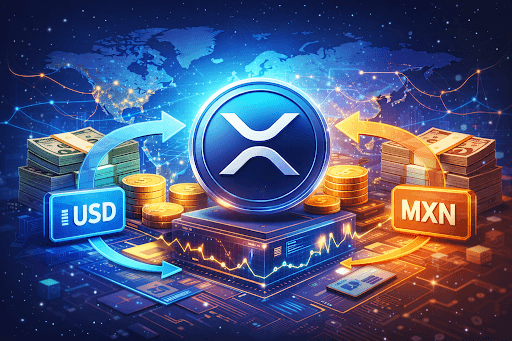
XRP is a digital cryptocurrency created to enable fast and affordable cross border payments. It is the native asset of the XRP Ledger, an open source blockchain launched in 2012. From the beginning, XRP was designed to move value quickly between individuals, financial institutions, and payment providers. The main purpose of XRP is to act as a bridge currency. It helps convert one currency into another in seconds, reducing the need for multiple intermediary banks and lowering transaction costs. This makes international transfers more efficient compared to traditional financial systems. Unlike many payment focused cryptocurrencies that rely on mining, XRP does not use Proof of Work. All 100 billion XRP were created at launch, and transactions are validated through a consensus process rather than mining rewards. This design allows the network to process transactions quickly while keeping fees extremely low.
Using Cryptocurrency for Digital Purchases at Baxity Store
Baxity Store is a digital marketplace designed to make everyday online purchases more accessible through cryptocurrency. Instead of interacting directly with complex blockchain tools or technical wallet integrations, users can pay with digital assets in a simple checkout process. The experience is structured to feel similar to traditional online shopping. Through the platform, customers can obtain digital products such as gift cards, prepaid cards, and gaming credits. This allows cryptocurrency to be used in a practical format that many people already understand. Rather than converting crypto into fiat manually, users can exchange digital assets for codes that are ready to redeem on popular platforms. Baxity Store also provides crypto related cards and vouchers connected to widely used digital services and payment ecosystems. These products make it possible to convert cryptocurrency into balances that can be used for subscriptions, online entertainment, shopping, and other digital payments. Delivery is instant, with codes sent electronically after purchase. By supporting multiple cryptocurrency payment options and offering a straightforward purchasing process, Baxity Store serves as a convenient bridge between digital assets and real world online spending, without unnecessary technical complexity.
What Is the XRP Ledger (XRPL)?
The XRP Ledger, or XRPL, is the open source blockchain network that powers XRP. It is a distributed ledger designed to record transactions securely, transparently, and efficiently. Unlike traditional financial databases controlled by a single institution, XRPL is maintained by a global network of independent servers. As a distributed ledger, XRPL works by sharing transaction data across multiple nodes. When a transaction is submitted, it is broadcast to the network and checked against protocol rules. Once the majority of trusted validators agree that the transaction is valid, it is added to the ledger. This process usually takes only a few seconds, which allows the network to settle payments quickly. Validators play a central role in maintaining the ledger. They are responsible for reviewing transactions and participating in the consensus process. Their main responsibilities include:
- Verifying that transactions follow network rules
- Preventing double spending
- Participating in consensus voting
- Updating the ledger once agreement is reached
XRPL does not use Proof of Work or Proof of Stake. There is no mining and no staking mechanism. Instead, the network relies on a consensus protocol in which validators compare transaction data and reach agreement through voting. This approach reduces energy consumption and allows transactions to be confirmed faster than many traditional blockchain systems.
How Does XRP Work?
XRP operates on the XRP Ledger through a unique consensus mechanism that allows transactions to be confirmed without mining or staking. The system is designed to prioritise speed, efficiency, and low transaction costs.
Consensus Mechanism Explained
The XRP Ledger uses the XRP Ledger Consensus Protocol. Instead of competing to solve cryptographic puzzles, validators communicate with each other and compare transaction proposals. Every few seconds, they agree on which transactions are valid and should be added to the ledger. A key concept in this process is the Unique Node List, or UNL. Each validator maintains a list of trusted validators whose votes it considers when determining consensus. If at least 80 percent of validators on a given UNL agree that a transaction is valid, it is confirmed and included in the ledger. Transactions are confirmed through multiple rounds of voting. In each round, validators share their proposed transaction sets. As agreement increases, invalid or disputed transactions are discarded. Once the required threshold is reached, the ledger is updated and the transactions become final. This model eliminates the need for mining rewards and reduces computational waste, allowing the network to operate efficiently.
Transaction Speed and Fees
The design of the XRP Ledger allows for fast settlement and very low transaction costs. Instead of rewarding miners, the network destroys a small portion of XRP as a transaction cost. This mechanism helps prevent spam while keeping fees minimal. Below is an overview of key performance metrics:
| Feature | XRP Ledger (XRPL) |
|---|---|
| Average confirmation time | 3 to 5 seconds |
| Network throughput | Up to 1,500 transactions per second |
| Average transaction fee | Around 0.0002 XRP |
| Mining required | No |
| Staking required | No |
Transaction confirmation typically takes between three and five seconds. The network can process up to 1,500 transactions per second under normal conditions, making it suitable for large scale payment activity. Fees remain low because there is no mining competition and no need to compensate validators with block rewards. The small transaction cost exists mainly to protect the network from spam attacks rather than to incentivise participants.
What Is XRP Used For?
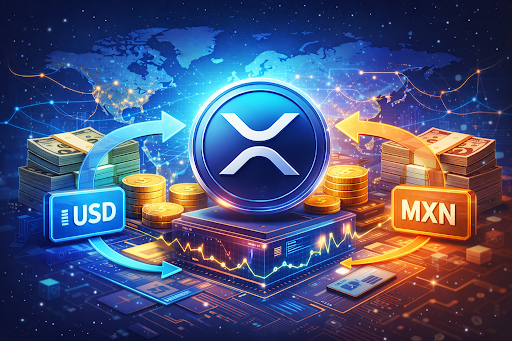
XRP was created primarily to improve the efficiency of global payments. Over time, its use cases have expanded beyond banking infrastructure and into the broader crypto ecosystem. One of the main applications of XRP is solving the problem of slow and expensive international transfers. Traditional cross border payments often pass through multiple correspondent banks, which increases processing time and fees. Settlement can take several days, especially when transactions involve different currencies and jurisdictions. XRP helps streamline this process by acting as a bridge asset. Instead of holding large reserves of foreign currencies in multiple countries, financial institutions can convert their local currency into XRP, transfer it across the network in seconds, and convert it into the destination currency. This reduces the need for pre funded accounts and lowers capital requirements. Within banking infrastructure, XRP has been integrated into payment solutions designed to support faster international settlements. It can be used as part of liquidity management systems that aim to reduce friction in global money transfers. Another important use case is On Demand Liquidity, often referred to as ODL. In this model, XRP serves as a temporary bridge currency between two fiat currencies. For example, if a company wants to send funds from the United States to Mexico, the process may look like this:
- USD is converted into XRP on a digital asset exchange
- XRP is transferred across the XRP Ledger in seconds
- XRP is converted into MXN on a local exchange
- The recipient receives funds in local currency
In this scenario, XRP is not held long term. It is used briefly to provide liquidity and facilitate conversion between currencies. Beyond institutional use, XRP is also used by individual users and traders. Common retail and crypto use cases include:
- Sending peer to peer payments with low fees
- Trading XRP against other cryptocurrencies on exchanges
- Using XRP within decentralised applications built on XRPL
- Transferring value quickly between exchanges
These varied use cases position XRP as both a payment focused digital asset and an active participant in the broader cryptocurrency market.
XRP vs Bitcoin: What’s the Difference?
XRP and Bitcoin are often compared because both are major cryptocurrencies. However, they were built with different goals and use different technical models. The most important difference lies in the consensus mechanism. Bitcoin uses Proof of Work, where miners compete to solve complex mathematical problems in order to validate transactions and create new blocks. This process requires significant computing power. XRP, on the other hand, uses the XRP Ledger Consensus Protocol. Validators communicate and vote on transactions every few seconds. No mining competition is involved. Another key difference is token issuance. Bitcoin is released gradually through mining. New coins enter circulation as block rewards for miners. XRP was pre issued at launch, with a total supply of 100 billion tokens created from the start. There is no mining process that generates additional XRP over time. Transaction speed also separates the two networks. Bitcoin transactions typically take around 10 minutes to be included in a block, and longer for multiple confirmations. XRP transactions usually settle within three to five seconds. This makes XRP more suitable for fast payment scenarios. Energy consumption is closely related to the consensus model. Because Bitcoin relies on mining, it consumes a large amount of electricity. XRP does not require mining, which significantly reduces energy usage and makes the network more efficient in terms of power consumption. Finally, there is a philosophical difference in decentralisation. Bitcoin was designed as a fully decentralised system with no central organisation behind it. XRP was created by developers who later formed Ripple, a company that builds payment solutions. While the XRP Ledger is open source and run by independent validators, critics argue that Ripple’s historical involvement and token holdings influence perceptions of decentralisation.
XRP vs Ethereum: Key Differences
Both XRP and Ethereum are major players in the cryptocurrency market, but they were designed with different objectives and technical foundations. One of the main differences is smart contract functionality. Ethereum was built as a programmable blockchain that allows developers to create decentralised applications and complex smart contracts. These contracts automatically execute when predefined conditions are met. XRP Ledger was originally designed for payments and value transfer. While it now supports certain smart contract features and sidechains, programmability is not its primary focus. The role of the token also differs. On Ethereum, ETH is used to pay for transaction fees, deploy smart contracts, and power decentralised applications. It acts as fuel for the entire ecosystem. XRP primarily functions as a bridge asset for transferring value and providing liquidity, especially in cross border transactions. Its role is more payment oriented than application driven. In terms of ecosystem focus, Ethereum has developed a large decentralised finance and NFT ecosystem. Thousands of projects operate on its network, ranging from lending protocols to gaming platforms. XRP Ledger focuses more on financial infrastructure, payments, tokenisation, and institutional use cases. The ecosystem is growing, but it is generally more specialised. The technical architecture also differs. Ethereum currently uses a Proof of Stake consensus mechanism, where validators stake ETH to secure the network. XRP uses a consensus protocol based on validator agreement without staking or mining. This results in faster settlement times and lower fees on the XRP Ledger, while Ethereum prioritises flexibility and programmability for a wide range of decentralised applications.
Who Created XRP?
The origins of XRP go back to the early days of cryptocurrency innovation. The idea was to create a digital payment system that could improve on Bitcoin by offering faster transactions and lower energy consumption. The XRP Ledger was launched in 2012 by three developers:
- David Schwartz
- Jed McCaleb
- Arthur Britto
Before the launch of XRPL, an earlier payment concept called RipplePay had been developed by Ryan Fugger in 2004. Fugger’s project aimed to create a decentralised financial network. The later developers built upon this concept and introduced blockchain technology, which led to the creation of the XRP Ledger and XRP as its native asset. Shortly after the launch of XRPL, a company was formed to support the development and commercial use of the technology. That company is Ripple. Ripple focuses on building payment solutions and financial products that use blockchain infrastructure. It is important to understand that Ripple and XRP are not the same. The distinction can be summarised as follows:
- XRP is the digital asset used on the XRP Ledger
- The XRP Ledger is the open source blockchain network
- Ripple is a private company that develops payment technologies and solutions
Although Ripple played a major role in promoting and developing use cases for XRP, the XRP Ledger itself is open source and maintained by a distributed network of validators. This separation is central to discussions about decentralisation and governance within the XRP ecosystem.
Is XRP Decentralized?
Whether XRP is decentralised depends on how decentralisation is defined. The XRP Ledger is open source, and anyone can run a validator. Transactions are confirmed through consensus among independent nodes, not through mining controlled by a single entity. The network can continue operating even without direct involvement from Ripple. Supporters argue that decentralisation is supported by a global set of validators and the absence of mining pools. No single validator can approve transactions on its own, and consensus requires broad agreement across the network. Critics point to the initial token distribution. All 100 billion XRP were created at launch, and a large portion was allocated to Ripple. Although much of this supply is locked in escrow and released gradually, some believe this gives Ripple influence over the market. Validators also play a key governance role. Each validator selects its own trusted node list, even though Ripple publishes a recommended version. As a result, XRP is often described as more decentralised than traditional financial systems, but more structured than fully permissionless networks like Bitcoin.
Advantages of XRP
XRP has several advantages that make it attractive for payment focused use cases and cross border transfers. One of its strongest benefits is speed. Transactions on the XRP Ledger are typically confirmed within three to five seconds. This makes XRP significantly faster than many traditional banking systems and some older blockchain networks. Low transaction fees are another key advantage. The average fee is a small fraction of one XRP, which usually equals a tiny amount in fiat terms. Because there is no mining process and no block rewards, users do not compete with miners through higher fees. Scalability is also an important feature. The XRP Ledger can handle up to 1,500 transactions per second under normal conditions. This capacity makes it suitable for high volume payment flows and institutional usage. Finally, XRP benefits from partnerships with financial institutions. Ripple has worked with banks, payment providers, and remittance companies to integrate blockchain based solutions into cross border payment infrastructure. These collaborations have helped position XRP as a digital asset focused on real world financial applications.
Risks and Criticism of XRP
Despite its advantages, XRP also faces several risks and ongoing criticism. One of the main concerns involves regulation. XRP has been at the center of legal debates in the United States regarding whether it should be classified as a security. Regulatory uncertainty can affect exchange listings, institutional adoption, and market confidence. Changes in legal interpretation may also influence price performance. Another issue is token concentration. A significant portion of the total XRP supply was originally allocated to Ripple. Although much of it is locked in escrow and released gradually, critics argue that this structure creates potential market influence from a single organisation. There is also perceived dependence on Ripple. While the XRP Ledger operates independently as open source software, Ripple has played a central role in promoting and developing use cases for XRP. Some investors believe that XRP’s long term success is closely tied to Ripple’s business performance and partnerships. Finally, like most cryptocurrencies, XRP is volatile. Its price can change rapidly due to market sentiment, regulatory news, or broader crypto market movements. This volatility may present both opportunity and risk for investors.
XRP and Regulation
Regulation has played a major role in the public perception of XRP. The digital asset has been involved in legal disputes in the United States, where regulators questioned whether XRP should be classified as a security. These proceedings have attracted global attention and have influenced how exchanges, investors, and institutions approach the asset. The classification issue is important because it determines which laws apply. If a cryptocurrency is considered a security, it may be subject to stricter registration, reporting, and compliance requirements. This can affect how it is sold, traded, and promoted. For companies working with XRP, legal clarity is essential to operate within regulatory frameworks. Regulation also has a direct impact on price and adoption. Positive legal developments or clearer guidance can improve market confidence and encourage institutional participation. On the other hand, uncertainty or restrictive rulings may lead to exchange delistings, reduced liquidity, and increased volatility. As governments around the world continue to define crypto regulations, the regulatory environment remains one of the key factors influencing XRP’s long term adoption and market position.
How Is XRP Supply Structured?
The structure of XRP’s supply is different from many other cryptocurrencies. All tokens were created at launch, and no new XRP will ever be mined. Key elements of XRP’s supply model include:
- Total supply: 100 billion XRP were issued when the XRP Ledger was launched. This is the maximum supply, and it cannot be increased.
- Pre issued tokens: Unlike Bitcoin, XRP was not gradually released through mining. The full supply existed from the beginning.
- Escrow mechanism: A large portion of XRP was placed into escrow accounts. These funds are released in scheduled amounts, typically monthly. Any unused portion is returned to escrow, which creates predictability in token distribution.
- No inflation through mining: Since no new XRP is created, the asset does not experience inflation in the traditional sense. In fact, a small amount of XRP is permanently destroyed with each transaction fee, slightly reducing the total supply over time.
This structure can influence price dynamics. A fixed maximum supply creates scarcity, which may support long term value if demand increases. At the same time, the scheduled release of escrowed tokens can affect market liquidity and investor sentiment. As with any digital asset, price ultimately depends on demand, utility, and overall market conditions.
How to Buy XRP
There are several ways to buy XRP, depending on your experience level and preferred payment method. One of the most common options is purchasing XRP through a cryptocurrency exchange. After creating an account and completing identity verification, users can deposit funds and trade XRP against supported pairs. Most major exchanges offer XRP trading with fiat currencies and other cryptocurrencies. Another option is using a crypto broker. Brokers simplify the process by allowing users to buy XRP directly at a quoted price. This approach may be more convenient for beginners who prefer a guided experience instead of placing orders on an exchange. XRP can typically be purchased with fiat currencies such as USD or EUR through bank transfers, debit cards, or other supported payment methods. It can also be bought using cryptocurrencies like Bitcoin or Ethereum by trading one asset for another on an exchange. After purchasing XRP, storage is an important consideration. Users can keep their tokens in a hot wallet, which is connected to the internet and offers easy access for trading and payments. For higher security, many investors prefer a cold wallet, such as a hardware device that stores private keys offline. The choice depends on individual security needs and how frequently the XRP will be used.
Is XRP a Good Investment?
Whether XRP is a good investment depends on individual goals, risk tolerance, and market conditions. Like all cryptocurrencies, XRP carries both potential opportunities and risks. The value of XRP is influenced by several core factors. Utility plays an important role, particularly its use in cross border payments and liquidity solutions. Adoption by financial institutions and payment providers can also affect demand. Broader market sentiment in the cryptocurrency sector often has a significant impact as well. Demand for XRP may increase if more companies integrate the XRP Ledger into their payment infrastructure or if regulatory clarity improves. On the other hand, reduced institutional interest or negative legal developments could weaken demand. Trading activity and speculative interest also contribute to short term price movements. In terms of market position, XRP has consistently ranked among the largest cryptocurrencies by market capitalisation. Its long presence in the industry and established infrastructure distinguish it from many newer projects. However, it competes with other payment focused assets and smart contract platforms for relevance and adoption. As with any digital asset, potential investors should conduct independent research and consider how XRP fits within their broader investment strategy.
Conclusion
XRP is a cryptocurrency designed to facilitate fast and low cost value transfers. Built on the XRP Ledger, it uses a unique consensus mechanism instead of mining, allowing transactions to settle within seconds. With a fixed total supply and a payment focused architecture, XRP stands apart from many other digital assets. In today’s crypto industry, XRP occupies a distinct position. It is not primarily a smart contract platform or a purely decentralised monetary experiment. Instead, it focuses on financial infrastructure and liquidity solutions. Its long market presence and integration into payment discussions have kept it relevant through multiple market cycles. The potential of XRP lies in global payments. If blockchain based settlement continues to gain adoption among banks and payment providers, XRP may play a role as a bridge asset for cross border transfers. At the same time, its future will depend on regulation, institutional adoption, and overall demand within the evolving cryptocurrency landscape.
XRP Cryptocurrency FAQ
Can XRP Be Used for Tokenization and Digital Assets?
Yes, the XRP Ledger supports tokenization of real world and digital assets. Developers can issue custom tokens on the network that represent fiat currencies, commodities, stablecoins, or other financial instruments. These tokens can be transferred and traded directly on the ledger without requiring separate smart contracts. The built in decentralised exchange allows issued assets to interact with XRP and other tokens seamlessly. This functionality makes XRPL suitable for financial institutions exploring tokenized assets and settlement solutions. As tokenization grows globally, XRPL’s native features may become increasingly relevant.
Does XRP Support Smart Contracts?
While XRPL was not originally designed as a smart contract platform like Ethereum, it does support certain programmable features. The ledger includes native capabilities such as escrow, multi signature accounts, and payment channels. These tools allow developers to create conditional payment logic without deploying complex external code. In addition, sidechain solutions are being developed to expand programmability on the network. This approach allows XRPL to maintain speed and efficiency on the main ledger while offering extended functionality where needed. As development continues, the ecosystem may support more advanced decentralised applications.
How Secure Is the XRP Ledger?
The XRP Ledger has operated since 2012 with a strong record of network stability. Its consensus protocol requires a high percentage of validator agreement before transactions are finalised. Because transactions settle within seconds and do not rely on mining competition, the risk of chain reorganisations is reduced. The open source nature of the codebase allows developers and security researchers to review and audit the system. Network security also depends on the diversity and independence of validators. As with any blockchain, continued maintenance and upgrades are important for long term resilience.
Can XRP Transactions Be Reversed?
Once a transaction is validated and added to the XRP Ledger, it cannot be reversed. The network is designed to provide finality within seconds after consensus is reached. This makes XRP suitable for fast settlement scenarios where certainty is required. However, it also means users must carefully verify recipient addresses before sending funds. There is no central authority that can undo a confirmed transaction. Exchanges and service providers may assist in certain cases, but this depends on internal policies rather than blockchain mechanics.
How Does XRP Handle Network Congestion?
The XRP Ledger includes built in mechanisms to manage high transaction volumes. Because the network does not rely on mining, it can process transactions consistently without waiting for block intervals. If demand increases significantly, transaction costs may rise slightly to discourage spam activity. The small fee that is destroyed with each transaction helps prevent malicious network overload. Validators continuously communicate to maintain synchronisation and performance. These features contribute to stable operation even during periods of increased usage.
Is XRP Suitable for Long Term Infrastructure Use?
XRP was designed with institutional payments and liquidity management in mind. Its predictable supply structure and fast settlement times align with the needs of financial service providers. The ledger’s ability to handle high throughput makes it technically capable of supporting large scale applications. Regulatory clarity and global compliance standards will influence how widely it is adopted. If financial institutions continue exploring blockchain based settlement, XRP may remain part of long term infrastructure discussions. Its future role will depend on both technological development and the evolving regulatory landscape.

Comments
Sign in to join the conversation. Every comment is reviewed before it appears on the page.
Sign in to comment
You need an account to leave a comment. Sign in and your name will be used automatically.
MattC_uk
Didnt know XRP actually burns a tiny bit of the token as a fee. thats kinda interesting way to deal with spam without miners and stuff like in other chains. the part explaining how the consensus works helped a lot too.
Baxity
You’ve hit on one of the most unique parts of the XRP Ledger! That tiny burn fee is a brilliant "anti-spam" measure. By destroying a fraction of XRP (usually 0.00001) with every transaction, the network makes it too expensive for bots to flood the system, all without needing the massive energy of traditional miners. It’s a rare case where the network actually becomes more "scarce" the more it's used. Glad the consensus section helped clear up how it stays secure and fast!
AndyCollins88
the explanation about XRP as a bridge currency made things a lot clearer for me. its pretty different from projects that mostly focus on defi or nfts. the cross-border payment example helped understand how it could work in real life.
Baxity
That’s a great takeaway! You’ve touched on exactly why XRP stands apart in the ecosystem. While the hype usually follows DeFi and NFTs, XRP is focused on solving a 'boring' but massive problem: the friction in moving trillions of dollars across borders. Thinking of it as a bridge currency is the best way to visualize it. Instead of banks holding huge amounts of local currency in pre-funded accounts all over the world (which is slow and expensive), they can just use XRP as the 'translator' to move value in seconds. It’s definitely a more 'utility-first' approach compared to most speculative projects!