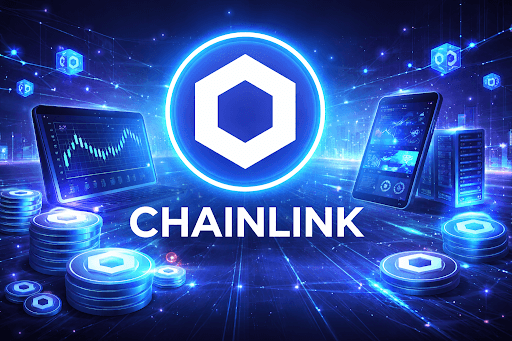
Chainlink (LINK) is a cryptocurrency and blockchain project designed to connect smart contracts with real world data. Unlike many digital assets that focus only on payments or value transfer, Chainlink plays an infrastructure role within the broader blockchain ecosystem. It enables decentralized applications to access information that exists outside of the blockchain, which is essential for many practical use cases. The importance of Chainlink comes from its ability to solve a fundamental limitation of blockchains. By design, most blockchains cannot directly interact with external data sources. This creates a gap between on chain logic and real world events. Chainlink helps bridge this gap, making it possible for smart contracts to operate based on accurate and timely information such as market prices, weather data, or event outcomes. At the core of Chainlink is the concept of an oracle network. Oracles act as intermediaries that fetch, verify, and deliver external data to blockchain systems. Chainlink improves this model by decentralizing the oracle process, reducing reliance on a single source and increasing reliability. This approach allows developers to build more advanced and trustworthy applications that combine blockchain technology with real world data inputs.
Using Cryptocurrency for Digital Purchases at Baxity Store
Baxity Store is a digital platform designed to simplify everyday online purchases by integrating cryptocurrency into familiar shopping experiences. Instead of dealing with complex blockchain tools or technical processes, users can access digital products in a straightforward way. This includes items such as gift cards, prepaid cards, and gaming credits, which can be used across a wide range of online services. The goal is to make digital assets more practical and easier to use in daily transactions. The platform focuses on bridging the gap between cryptocurrencies and traditional digital payments. By offering products linked to well known platforms and payment ecosystems, Baxity Store allows users to convert their crypto assets into usable balances. These balances can then be applied to subscriptions, entertainment services, and various online purchases. This approach removes many of the barriers that are often associated with direct crypto usage. Another key advantage is the instant delivery of digital codes, which makes the process fast and convenient. Users can complete transactions and receive their products within seconds, without delays or complicated steps. Support for multiple payment options also adds flexibility, allowing users to choose the method that suits them best. Overall, Baxity Store provides a practical solution for using cryptocurrency in real world online spending while maintaining simplicity and accessibility.
What Is Chainlink?
Chainlink is a decentralized oracle network that enables smart contracts on blockchains to securely interact with data and systems outside the blockchain environment. It acts as a bridge between on chain logic and off chain information, allowing decentralized applications to function with real world inputs. Instead of relying on a single source, Chainlink uses multiple independent nodes to ensure that the data delivered to smart contracts is accurate and reliable. An oracle in blockchain technology is a service that provides external data to smart contracts. Blockchains are designed to be secure and isolated systems, which means they cannot directly access information such as price feeds, APIs, or real world events. Oracles solve this limitation by collecting data from external sources and delivering it to the blockchain in a usable format. Without oracles, smart contracts would be limited to operating only with data already stored on chain. Chainlink addresses what is known as the oracle problem. This problem arises because introducing external data into a blockchain can create a point of centralization and potential vulnerability. If a smart contract relies on a single oracle, it becomes dependent on that source, which can be manipulated or fail. Chainlink solves this issue by decentralizing the oracle process, aggregating data from multiple nodes, and verifying it before delivering it to smart contracts. In the Web3 ecosystem, Chainlink plays a critical infrastructure role. It enables decentralized applications to interact with real world systems while maintaining the security and transparency of blockchain technology. This makes it a key component for many advanced use cases across different sectors. Key aspects of Chainlink include:
- Providing decentralized and secure data feeds for smart contracts
- Reducing reliance on centralized data providers
- Enabling automation based on real world events
- Supporting interoperability between different blockchains and systems
- Expanding the capabilities of Web3 applications beyond on chain data
These features highlight why Chainlink is considered a foundational layer in modern blockchain infrastructure. By solving the oracle problem and enabling reliable data exchange, it significantly expands what smart contracts and Web3 applications can achieve in practice.
History of Chainlink
Chainlink was first introduced in 2017 as a project aimed at solving the limitations of smart contracts when it comes to accessing external data. The idea was formalized in a whitepaper that outlined a decentralized oracle network capable of securely connecting blockchains with real world information. This concept quickly gained attention within the blockchain community, as it addressed one of the most important technical challenges in the industry. The project was founded by Sergey Nazarov and Steve Ellis, with contributions from researchers such as Ari Juels. Their combined expertise in blockchain technology, cryptography, and distributed systems helped shape Chainlink into a reliable infrastructure solution for decentralized applications. The Chainlink network officially launched in 2019 on the Ethereum blockchain. This launch marked the beginning of live oracle services, allowing smart contracts to interact with off chain data through a decentralized network of nodes. Since then, Chainlink has expanded significantly, integrating with multiple blockchain ecosystems and becoming a widely adopted solution in Web3. Below is an overview of key milestones in Chainlink’s development:
| Year | Milestone |
|---|---|
| 2017 | Chainlink whitepaper published and project announced |
| 2018 | Development phase and early partnerships established |
| 2019 | Mainnet launch on Ethereum and first oracle integrations |
| 2020 | Rapid adoption in DeFi with price feeds used across major platforms |
| 2021 | Introduction of advanced features such as verifiable randomness and automation |
| 2022–2024 | Expansion of cross chain solutions and growth of ecosystem partnerships |
Over time, Chainlink has evolved from a theoretical concept into a critical component of blockchain infrastructure. Its continued development reflects the growing demand for reliable data connectivity in decentralized systems, especially as Web3 applications become more complex and widely adopted.
How Chainlink Works
Chainlink operates as a decentralized oracle network that connects smart contracts with external data sources. Instead of relying on a single provider, it uses a network of independent nodes to collect, verify, and deliver data. This approach ensures that information entering the blockchain is accurate, tamper resistant, and reliable for use in decentralized applications. Decentralized oracles are a key component of this system. Unlike traditional oracles, which depend on a single data source, decentralized oracles gather information from multiple providers. Each node retrieves data independently, and the results are aggregated before being sent to the smart contract. This reduces the risk of manipulation and eliminates a single point of failure. The process of transferring data from off chain to on chain environments follows several steps. First, a smart contract sends a request for specific data. Chainlink nodes then retrieve this data from external sources such as APIs or databases. After that, the data is validated and formatted into a standardized structure. Finally, the verified result is delivered back to the blockchain, where the smart contract can execute its logic based on the received information. Node operators play an essential role in maintaining the network. These operators run the infrastructure that fetches and processes data. They are responsible for ensuring that the data they provide is accurate and delivered on time. In return, they receive rewards in LINK tokens. Node operators can also stake tokens, which helps guarantee honest behavior and aligns incentives within the network. To ensure reliability, Chainlink uses a combination of aggregation mechanisms and reputation systems. Data from multiple nodes is compared, and outliers are filtered out to produce a consensus result. Nodes with a history of accurate performance are more likely to be selected for future tasks, while unreliable nodes may be excluded. This system creates a strong economic and technical foundation that helps maintain trust in the data supplied to smart contracts.
Key Features of Chainlink
Chainlink provides a range of features that make it a critical infrastructure layer for decentralized applications. These features are designed to improve data reliability, expand smart contract capabilities, and enable more complex use cases across the Web3 ecosystem. Key features of Chainlink include:
- Decentralized data feeds. Chainlink delivers data from multiple independent sources, which are aggregated to ensure accuracy. These feeds are widely used in DeFi applications, especially for price data that must remain reliable and tamper resistant.
- Verifiable randomness (VRF). Chainlink offers a secure way to generate random numbers that can be independently verified. This is especially important for applications such as blockchain games, NFTs, and lotteries, where fairness and transparency are essential.
- Automation (Chainlink Automation). Chainlink enables smart contracts to execute actions automatically when predefined conditions are met. This reduces the need for manual intervention and supports use cases like automated payments, rebalancing, and event driven processes.
- Cross chain interoperability (CCIP). Chainlink allows different blockchains to communicate with each other through its interoperability protocol. This makes it possible to transfer data, tokens, and messages across multiple networks, helping to build more connected and flexible systems.
- Security and reliability. Chainlink uses decentralized node networks, data aggregation, and reputation systems to ensure high levels of security. By avoiding single points of failure, it provides a dependable foundation for applications that rely on external data.
Together, these features allow Chainlink to extend the functionality of smart contracts far beyond simple transactions. They enable developers to build applications that interact with real world systems while maintaining the core principles of decentralization and trust.
What Is the LINK Token?
LINK is the native cryptocurrency of the Chainlink network and plays a central role in its operation. Unlike many digital assets that are primarily used for payments or value storage, LINK is designed to support the functionality of the oracle network. It acts as an incentive mechanism that aligns the behavior of participants and ensures the smooth execution of data services. Within the Chainlink ecosystem, LINK is used to pay node operators for retrieving, validating, and delivering external data to smart contracts. When a decentralized application requests information, it compensates node operators in LINK tokens for their work. The cost of these services depends on factors such as data complexity, network demand, and the reputation of the nodes involved. Staking is an important component of the network’s security model. Node operators can lock up a certain amount of LINK as collateral, which helps guarantee honest behavior. If a node provides inaccurate or malicious data, it risks losing part of its staked tokens. This creates strong economic incentives for maintaining reliability and accuracy across the network. In terms of tokenomics, LINK has a maximum supply of 1 billion tokens. These tokens were initially distributed among the development team, early investors, and the broader ecosystem to support growth and adoption. A significant portion is allocated for node operator rewards and ongoing development. This distribution model is intended to sustain the network over time while encouraging active participation from its users. Overall, the LINK token is essential to the Chainlink network, as it powers transactions, secures the system through staking, and incentivizes the delivery of high quality data. Without it, the decentralized oracle infrastructure would not be able to function effectively.
Chainlink Use Cases
Chainlink is widely used across the blockchain ecosystem because it enables smart contracts to interact with real world data. This functionality opens the door to a wide range of practical applications in finance, gaming, insurance, and enterprise solutions. By providing reliable and decentralized data inputs, Chainlink allows developers to build more advanced and functional decentralized applications. Some of the most common use cases of Chainlink include:
- DeFi price feeds. Chainlink is heavily used in decentralized finance to supply accurate and up to date price data. These price feeds are essential for lending platforms, decentralized exchanges, and derivatives protocols, where incorrect data could lead to significant financial losses.
- NFT and gaming mechanics. Blockchain games and NFT platforms use Chainlink for generating verifiable randomness. This ensures fairness in scenarios such as loot distribution, random rewards, and game outcomes, where trust and transparency are critical.
- Insurance solutions. Chainlink enables smart contracts to process insurance claims automatically based on external data. For example, weather data or flight information can trigger payouts without manual intervention, making the process faster and more efficient.
- Smart contract automation. With automation features, Chainlink allows contracts to execute predefined actions when certain conditions are met. This is useful for recurring payments, yield farming strategies, and other event driven financial operations.
- Enterprise applications. Businesses can use Chainlink to connect blockchain systems with traditional infrastructure. This includes integrating APIs, enabling secure data exchange, and supporting hybrid systems that combine on chain and off chain components.
These use cases demonstrate how Chainlink extends the functionality of blockchain technology beyond simple transactions. By enabling secure access to external data, it supports the development of more practical and scalable Web3 applications.

Chainlink vs Other Blockchains
Chainlink is often compared to traditional blockchain platforms, but it serves a very different purpose. While networks like Ethereum are designed to process transactions and run smart contracts, Chainlink focuses on providing reliable data to those smart contracts. Instead of competing with blockchains, it complements them by expanding their capabilities. One of the key differences between Chainlink and Ethereum is their core function. Ethereum acts as a programmable blockchain where decentralized applications are built and executed. Chainlink, on the other hand, operates as a decentralized oracle network that supplies external data to these applications. It does not replace Ethereum but enhances it by enabling smart contracts to interact with information outside the blockchain. Compared to other oracle solutions, Chainlink stands out due to its decentralized architecture. Many earlier oracle systems relied on a single data provider, which created risks related to manipulation and failure. Chainlink reduces these risks by aggregating data from multiple independent nodes and applying validation mechanisms. This approach improves both security and reliability, making it one of the most widely adopted oracle solutions in the industry. It is also important to understand that Chainlink is not a classical blockchain. It does not maintain its own ledger of transactions in the same way as networks like Ethereum or Bitcoin. Instead, it operates as a layer that connects different systems. Its primary role is to facilitate communication between blockchains and external data sources rather than to serve as a standalone execution environment. As an infrastructure layer, Chainlink plays a foundational role in the Web3 ecosystem. It enables interoperability, supports complex smart contract logic, and allows decentralized applications to function in real world scenarios. By acting as a bridge between isolated systems, Chainlink helps unlock the full potential of blockchain technology.
Advantages and Disadvantages of Chainlink
Chainlink offers a number of benefits that make it a key component of modern blockchain infrastructure, but it also comes with certain limitations that should be considered. Among the main advantages:
- High security. Chainlink uses decentralized networks of nodes and data aggregation mechanisms to reduce the risk of manipulation. This approach helps ensure that the data delivered to smart contracts is accurate and resistant to tampering.
- Decentralization. By relying on multiple independent node operators, Chainlink avoids single points of failure. This increases trust in the system and aligns with the core principles of blockchain technology.
- Wide range of applications. Chainlink is used across many sectors, including DeFi, gaming, insurance, and enterprise solutions. Its flexibility allows it to support a variety of use cases that require reliable external data.
At the same time, there are some disadvantages:
- Dependence on external data. Even though Chainlink improves how data is delivered, it still relies on external sources. If the original data is incorrect, the system may pass that information to smart contracts.
- Competition. There are other oracle solutions being developed, and the market continues to evolve. This creates competitive pressure and may affect long term adoption.
- Technological complexity. Chainlink involves advanced mechanisms such as decentralized node networks and data validation processes. This complexity can make it harder for new users and developers to fully understand and implement.
Overall, Chainlink provides strong advantages in terms of security and functionality, but like any technology, it operates within certain constraints that reflect the challenges of connecting blockchains with real world data.
Future of Chainlink
The future of Chainlink is closely tied to the continued development of oracle technologies and the broader expansion of the blockchain ecosystem. As decentralized applications become more advanced, the demand for reliable and secure data inputs is expected to grow. Chainlink is well positioned to benefit from this trend, as it focuses on improving how external data is delivered and verified within blockchain environments. The growth of Web3 and decentralized finance is another important factor. As more platforms rely on smart contracts for financial services, gaming, and digital ownership, the need for accurate real world data becomes essential. Chainlink’s infrastructure can support these applications by providing consistent and tamper resistant data feeds, which are critical for maintaining trust in decentralized systems. One of the most promising areas for Chainlink is the development of its cross chain interoperability protocol, known as CCIP. This technology aims to enable seamless communication between different blockchains, allowing them to exchange data, tokens, and instructions. If widely adopted, CCIP could play a significant role in creating a more connected and efficient blockchain ecosystem. Looking ahead, Chainlink has the potential to become part of global digital infrastructure. By bridging blockchains with external systems such as financial markets, enterprise databases, and public data sources, it could support a wide range of real world applications. As industries continue to explore blockchain integration, solutions like Chainlink may serve as a foundation for secure and scalable data connectivity.
Is Chainlink a Good Investment?
Chainlink is often considered an important project within the blockchain ecosystem, but whether it is a good investment depends on a variety of factors. As with any cryptocurrency, its value is influenced by market conditions, adoption levels, and overall demand for its technology. Rather than being viewed only as a digital asset, LINK is also tied to the usage of the Chainlink network, which adds another layer of complexity to its evaluation. Several factors can affect the price of LINK. One of the most significant is the level of adoption across decentralized finance and Web3 applications. As more platforms rely on Chainlink for data feeds and automation, demand for its services may increase. Technological developments, such as improvements in oracle solutions and the expansion of cross chain capabilities, can also influence market perception. In addition, general trends in the cryptocurrency market, including investor sentiment and macroeconomic conditions, play a major role in price movements. At the same time, there are risks to consider. The cryptocurrency market is known for its volatility, and LINK is no exception. Prices can change rapidly due to shifts in demand, competition from other oracle providers, or broader market downturns. There is also uncertainty related to regulation and the long term adoption of blockchain technology, which can impact the value of many digital assets. Overall, Chainlink represents a project with strong technological relevance, but its investment potential is closely tied to external factors and market dynamics. Any evaluation should take into account both the opportunities and the risks associated with the evolving cryptocurrency landscape.
The Bottom Line
Chainlink is a specialized blockchain project that focuses on solving one of the most important limitations of smart contracts, which is access to reliable external data. By introducing a decentralized oracle network, it enables blockchains to interact with real world information in a secure and verifiable way. This significantly expands the range of possible applications for decentralized technologies. Within the криптоэкосystem, Chainlink plays a foundational role as an infrastructure provider rather than a standalone platform for transactions. It supports decentralized finance, gaming, insurance, and many other sectors by delivering accurate data that smart contracts depend on. Without solutions like Chainlink, many advanced use cases in Web3 would not function properly. The importance of Chainlink lies in its ability to connect isolated systems and create a bridge between blockchain networks and external environments. As the demand for more complex and practical blockchain applications continues to grow, infrastructure projects like Chainlink are likely to become even more essential.
FAQs About Chainlink (LINK) and Its Role in Blockchain
What makes Chainlink different from other crypto projects?
Chainlink stands out because it is not designed as a traditional payment system or a standalone blockchain for transactions. Instead, it focuses on providing services that other blockchains rely on to function more effectively. This gives it a unique position as a supporting layer rather than a direct competitor to most cryptocurrencies. Another key difference is its strong focus on data integrity and verification, which is critical for applications that depend on accurate external inputs. Chainlink also integrates with multiple blockchain networks instead of being limited to one ecosystem. This flexibility allows it to adapt to different environments and use cases. As a result, it is often seen as a universal solution for connecting blockchains with external systems.
How does Chainlink ensure the quality of the data it provides?
Chainlink uses a multi layer approach to maintain high data quality across its network. It selects multiple independent node operators to retrieve the same data from different sources, which reduces the chance of errors or manipulation. The system then aggregates the collected data and filters out inconsistent results before delivering it to smart contracts. Reputation mechanisms are also used to track the performance of node operators over time. Nodes that consistently provide accurate data are more likely to be selected for future tasks. In addition, economic incentives encourage honest behavior, as operators risk losing rewards if they provide unreliable information. This combination of technical and economic safeguards helps maintain a high level of trust in the system.
Can Chainlink be used outside of cryptocurrency applications?
Chainlink has the potential to be used far beyond traditional cryptocurrency use cases. Its ability to securely transfer data between different systems makes it relevant for industries such as finance, supply chain management, and insurance. For example, businesses can use Chainlink to automate processes based on real world events without relying on centralized intermediaries. It can also be integrated with existing IT infrastructure through APIs, making it easier for companies to adopt blockchain solutions. This opens the door for hybrid systems that combine blockchain technology with traditional databases and services. As adoption grows, Chainlink may become a tool for connecting various digital ecosystems, not just those related to crypto.
What factors influence the demand for Chainlink services?
The demand for Chainlink services is closely linked to the growth of decentralized applications and the need for reliable external data. As more projects require accurate information to operate, the importance of oracle networks increases. The expansion of sectors like decentralized finance, gaming, and tokenized assets also contributes to higher usage of Chainlink solutions. Technological developments within the project can attract new users and developers, which further drives demand. Partnerships with other blockchain platforms and enterprises may also play a role in expanding its reach. At the same time, overall activity in the blockchain industry can influence how widely Chainlink services are used.
Is Chainlink dependent on the success of other blockchains?
Chainlink is closely connected to the broader blockchain ecosystem, which means its growth is influenced by the success of other networks. Since it provides services to decentralized applications, its usage increases as more projects are built on different blockchains. However, this dependency can also be seen as an advantage, because Chainlink is not limited to a single platform. It can integrate with multiple networks, which reduces the risk associated with relying on one ecosystem. This cross network compatibility allows it to benefit from the overall expansion of blockchain technology. As long as there is demand for smart contracts that require external data, Chainlink is likely to remain relevant.

Comments
Sign in to join the conversation. Every comment is reviewed before it appears on the page.
Sign in to comment
You need an account to leave a comment. Sign in and your name will be used automatically.
No comments yet. Be the first to write one.