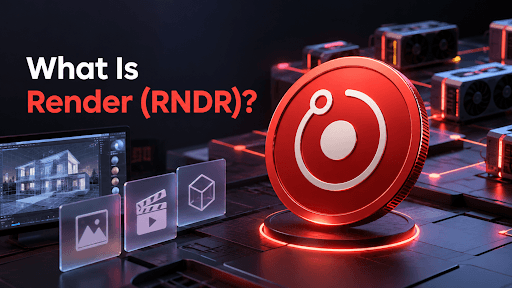
GPU computing is used for 3D graphics, animation, visual effects, gaming, artificial intelligence, and other resource-intensive applications. Render Network provides a decentralized way to access these computing resources by connecting people who need GPU power with operators who can provide it.
Render crypto is part of this ecosystem. The network originally used the Ethereum-based RNDR token, while its current token, RENDER, operates on Solana. This is why both RNDR crypto and RENDER are still commonly associated with the project. Understanding Render therefore requires looking at both the cryptocurrency and the GPU network behind it.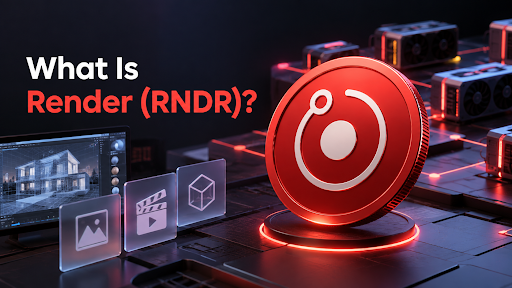
Using Cryptocurrency for Digital Purchases at Baxity Store
Baxity Store provides a practical way to connect cryptocurrency with everyday digital purchases. Instead of using digital assets only for trading, holding, or blockchain-based applications, customers can use supported cryptocurrency payment methods to purchase products such as gift cards, prepaid cards, gaming credits, and digital vouchers. This creates a familiar online shopping experience while giving crypto users access to products for entertainment, shopping, subscriptions, and other digital services.
The store offers digital products associated with popular gaming, shopping, entertainment, and payment platforms. Depending on the selected product, a card or voucher can be used to add funds to an account, pay for subscriptions, purchase games or digital content, or access other supported online services. Available cryptocurrency payment methods may vary depending on the order, region, and checkout conditions, so customers should check the options displayed before completing a purchase.
With digital code delivery and a broad selection of products, Baxity Store helps connect cryptocurrency with practical online spending. Users can select a suitable card or voucher, choose one of the currently available payment methods, and receive a digital product without having to navigate complex blockchain services.
What Is Render Crypto and Render Network?
Render Network is a decentralized GPU rendering and compute platform. It allows creators and developers to access distributed GPU resources without relying entirely on their own hardware. GPU providers, in turn, can make available computing capacity accessible through the network.
RENDER is the token used within this ecosystem. It supports the economic relationship between users who require computing resources and operators who provide them. The project is particularly associated with 3D rendering, animation, visual effects, virtual environments, and other GPU-intensive workloads.
The main terms are:
| Term | Meaning |
|---|---|
| Render Network | Decentralized GPU rendering and compute network |
| RENDER | Current Solana-based token |
| RNDR | Legacy Ethereum-based token |
| Node operator | Participant providing GPU resources |
| Creator | User accessing GPU resources through the network |
RNDR and RENDER are related but should not be treated as identical current assets. RNDR is the legacy ERC-20 token on Ethereum, while RENDER is the newer SPL token on Solana. The network introduced an official upgrade process that allows eligible RNDR to be converted to RENDER at a 1:1 ratio.
This transition explains why older articles and some crypto-related searches still refer to RNDR token or RNDR crypto. For current Render Network activity, RENDER is the relevant token.
History of Render Cryptocurrency and Render Network
Render Network was conceived by Jules Urbach, founder and CEO of OTOY, with the goal of creating a distributed system for GPU rendering. The first public RNDR token sale took place on Ethereum in 2017, followed by further development and testing of the network. Render Network publicly launched in 2020.
As the ecosystem developed, the community approved a transition of the network's infrastructure to Solana. The new RENDER token launched on Solana in 2023. The migration provided the network with an infrastructure designed for higher transaction throughput and lower transaction costs.
The change also created the distinction that exists today between RNDR and RENDER. RNDR represents the project's original Ethereum-based token, while RENDER is associated with the current Solana-based Render Network ecosystem.
How Does Render Network Work?
Render Network works as a marketplace for distributed GPU computing. Instead of processing an entire graphics project on a local workstation, a creator can use GPU resources available through the network. This can provide additional computing capacity for demanding rendering and other supported workloads.
A typical Render Network workflow includes several steps:
- The creator prepares and submits a compatible project.
- The required job parameters are selected.
- The workload is distributed to available GPU resources.
- Participating nodes process the assigned work.
- The creator reviews the results.
- Approved output can be downloaded, while GPU providers receive compensation according to the network's model.
The GPUs perform the actual computational work. Blockchain technology does not render the images itself. Instead, it supports the economic and coordination mechanisms that allow participants to exchange computing resources through a decentralized network.
GPU rendering is well suited to this model because graphics processors can perform many calculations in parallel. They are widely used for 3D scenes, animation, lighting, visual effects, and other computationally demanding graphics tasks. A decentralized GPU rendering network extends access to this processing capacity beyond the hardware available on a single computer.
What Is Render Token Used For?
The RENDER token is part of the economic infrastructure of Render Network. Its utility is connected to activity within the decentralized GPU marketplace rather than simply transferring a cryptocurrency between users.
RENDER is used to support payments for network services, incentives for GPU providers, and the broader token economy. Node operators contribute processing capacity, while creators generate demand for that capacity through rendering and compute jobs.
Render tokenomics also incorporates a Burn-and-Mint Equilibrium model, known as BME. Under this system, network usage is connected to token burning, while emissions are used to support incentives such as rewards for node operators. The objective is to connect the token economy more closely with actual demand for services on Render Network.
RENDER also has a role in the wider ecosystem and its community governance. Render Network Proposals provide a process through which changes and initiatives related to the network can be considered by the community.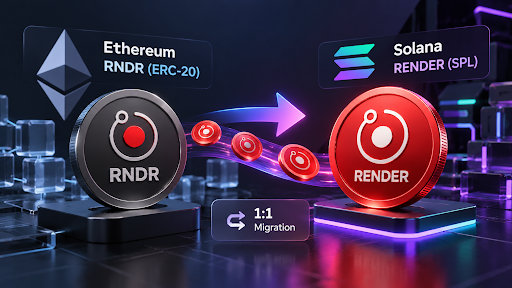
Render Network Use Cases and Applications
The main Render Network use cases are connected to workloads that require significant GPU resources. Its original focus was graphics rendering, but the potential applications of distributed GPU computing extend into several areas of digital production.
| Use Case | Application |
|---|---|
| 3D rendering | Processing complex scenes and high-resolution images |
| Animation | Rendering sequences containing many frames |
| Visual effects | Providing additional GPU capacity for production |
| Architectural visualization | Creating detailed architectural renders |
| Gaming | Supporting graphics and virtual production workflows |
| Motion graphics | Processing graphics-intensive creative projects |
| Generative AI | Supporting compatible GPU-intensive AI workloads |
Render Network supports workflows involving widely used digital creation tools and rendering engines. This makes the platform relevant to individual artists, designers, studios, developers, and other users who may require scalable GPU computing resources.
Artificial intelligence has also expanded the potential applications of decentralized GPU infrastructure. Generative AI and other computationally intensive systems can require substantial GPU capacity, creating an overlap with the hardware already used for professional graphics.
However, Render should not be viewed exclusively as an AI crypto. Render Network was developed around decentralized GPU rendering and continues to serve graphics, animation, visual effects, gaming, immersive media, and other digital content workflows. AI represents an additional area in which distributed GPU resources can be applied rather than the sole purpose of the network.
Render Network on Solana and the RNDR to RENDER Migration
Render Network originally used RNDR, an ERC-20 token on Ethereum. Following community approval of the network's migration to Solana, a new SPL token called RENDER was introduced. The transition was designed to support a network requiring frequent transactions while benefiting from Solana's higher throughput and lower transaction costs.
The RNDR to RENDER migration is important for users because both ticker symbols can still appear in older articles, wallets, exchanges, and search results. An official upgrade mechanism was introduced to convert eligible RNDR to RENDER at a 1:1 ratio. However, users should always check the token, blockchain network, wallet compatibility, and current platform requirements before making a transfer.
Today, RENDER is the token associated with current Render Network operations on Solana. Legacy RNDR may still exist on Ethereum, but it is no longer used for current network operations.
Render Crypto Advantages and Limitations
Render crypto is tied to a specific technological use case rather than functioning only as a transferable digital asset. The network connects demand for GPU computing with distributed resources that might otherwise remain unused, giving creators another option for accessing processing capacity.
Key advantages of the Render Network include:
- Access to distributed GPU resources for demanding workloads
- The ability to scale computing capacity according to project requirements
- Support for professional rendering and digital content workflows
- An economic model that rewards providers of GPU resources
- Potential applications beyond rendering, including compatible AI and compute workloads
There are also limitations to consider. Render Network competes with centralized cloud computing providers, traditional render farms, and other decentralized computing platforms. Its development also depends on continued demand from creators and developers, sufficient participation from GPU providers, and successful integration with relevant software and workflows.
The RENDER cryptocurrency introduces additional considerations. Like other crypto assets, its market value can fluctuate significantly and may not directly reflect growth in network usage. Technical utility and token market performance should therefore be considered separately.
Render Cryptocurrency Regulatory Considerations
The regulatory treatment of Render cryptocurrency depends on the jurisdiction. Rules affecting crypto assets can cover areas such as trading, transfers, custody, taxation, reporting, and the operation of cryptocurrency platforms. These requirements may change as governments and regulators develop new frameworks for digital assets.
Users should check the rules that apply in their country before buying, selling, transferring, or holding RENDER. Availability on a particular exchange or wallet does not necessarily mean that the same services or transactions are permitted in every region.
How to Buy Render Crypto (RENDER)
Users can buy Render crypto through cryptocurrency platforms that list the current RENDER token. Availability, supported payment methods, trading pairs, fees, and account requirements vary between platforms and regions.
A typical purchase involves the following steps:
- Choose a cryptocurrency platform that supports RENDER.
- Create an account and complete any required verification.
- Deposit fiat currency or another supported crypto asset.
- Find the appropriate RENDER trading pair.
- Enter the amount you want to purchase.
- Review the price, network, fees, and transaction details.
- Confirm the purchase and choose where the tokens will be stored.
Because the Render ecosystem has used both RNDR and RENDER, checking the asset and blockchain is particularly important. Users searching where to buy Render crypto should confirm that a platform supports the token they actually intend to purchase rather than relying only on the Render name.
How to Store Render Crypto Safely
RENDER can be stored using a wallet that supports the token and its blockchain network. Users may keep their assets with a custodial service, use a software wallet, or move them to a compatible hardware wallet. Each approach offers a different balance between convenience and direct control over the assets.
Custodial wallets allow a third party, such as an exchange, to manage the private keys. Self-custody wallets give the user direct control of those keys but also make the user responsible for protecting recovery information and approving transactions safely.
Before transferring RENDER to a Render crypto wallet, users should verify the destination address and network compatibility. Sending a token through an unsupported network or to an incompatible address can result in loss of funds.
Render Tokenomics and Factors That Can Affect RENDER
Render tokenomics is closely connected to the operation of the network. The Burn-and-Mint Equilibrium model links network activity with token burning and emissions, while incentives help compensate participants who provide GPU resources. This gives RENDER a functional role within the ecosystem.
However, the market value of RENDER is influenced by more than its technical utility. Factors that may affect demand and market activity include:
- Usage of Render Network and demand for GPU computing
- Adoption among creators, developers, and studios
- Availability of GPU resources within the network
- Development of rendering, AI, and other compute-intensive applications
- Competition from centralized and decentralized computing providers
- Changes to Render tokenomics and network governance
- Broader cryptocurrency market conditions
These factors can develop independently of one another. Increased interest in GPU computing, for example, does not automatically result in higher token prices. Cryptocurrency markets are volatile, and past market performance does not guarantee future results.
Conclusion: What Is Render Cryptocurrency?
Render Network combines decentralized GPU computing with a blockchain-based economic system. It connects creators and developers who need computing resources with operators that can provide GPU capacity, supporting applications such as 3D rendering, animation, visual effects, gaming, immersive content, and compatible AI workloads.
The project's cryptocurrency has also evolved alongside the network. RNDR was the original Ethereum-based token, while RENDER is the current Solana-based token used within the Render ecosystem. This distinction is important when buying, storing, transferring, or researching Render crypto, particularly because both names can still appear across cryptocurrency platforms and older resources.
Frequently Asked Questions About Render (RNDR) and RENDER
Can You Mine Render (RENDER)? RENDER is not mined in the same way as cryptocurrencies that use Proof of Work. Running a Render Network node involves providing compatible GPU resources for jobs rather than solving cryptographic puzzles to create new blocks. Eligible node operators can receive rewards for successfully completing work through the network. This means that owning a powerful GPU does not automatically generate RENDER tokens. Hardware, software, network requirements, and current node availability should be checked before attempting to participate. Users should also distinguish between operating a Render node and conventional cryptocurrency mining, since the underlying processes and reward mechanisms are different.
How Can You Earn RENDER Tokens? One way to participate in the Render ecosystem is by providing eligible GPU computing resources as a node operator. Operators can process jobs assigned through the network and receive compensation according to the applicable reward system. Participation requires more than simply connecting any graphics card, since hardware and software must meet the network's current requirements. Potential operators should also consider electricity costs, hardware utilization, internet connectivity, and maintenance when evaluating participation. Rewards can vary according to network conditions and the type or volume of work available. For this reason, providing GPU resources should not be viewed as a guaranteed source of fixed income.
Does Render Network Have a Maximum Token Supply? RENDER has a defined token supply framework, but understanding the supply requires considering the network's Burn-and-Mint Equilibrium model rather than looking at a single number in isolation. Tokens can be burned as network services are used, while emissions are distributed according to the protocol's incentive structure. As a result, circulating supply can be influenced by both network activity and scheduled emissions. Users researching Render tokenomics should distinguish between maximum supply, total supply, and circulating supply because these metrics describe different aspects of the token. They should also use current network or market data when checking these figures, as circulating supply can change over time. Token supply information alone does not determine the market value of RENDER.
What Do You Need to Use Render Network? The requirements depend on whether someone wants to submit rendering work or provide GPU resources. Creators need a supported workflow, compatible software, and a project that can be prepared according to Render Network requirements. Node operators need compatible hardware and must meet the technical requirements established for participation in the network. Not every application, rendering engine, or GPU configuration is necessarily supported. File preparation, scene compatibility, storage, and output settings can also affect whether a particular project is suitable for the network. Checking the current Render Network documentation before preparing a large job can help avoid compatibility problems.
How Are Render Network Jobs Priced? The cost of using Render Network can depend on factors such as the complexity of the job, required computing resources, rendering settings, and the service options selected by the creator. A simple scene and a complex animation sequence can require very different amounts of GPU processing. Resolution, sample settings, frame count, rendering engine, and scene complexity can all influence the amount of work required. This means there is no single fixed price that applies to every Render Network job. Creators should review the estimated cost and job parameters before approving processing. Cryptocurrency market prices and the network's economic mechanisms should also be distinguished from the actual computational requirements of a rendering project.
How Is Render Network Different From a Traditional Cloud Rendering Service? Traditional cloud rendering usually relies on computing infrastructure owned or controlled by a centralized provider. Render Network instead coordinates GPU resources supplied through a distributed network of participants. Both approaches can give creators access to computing power beyond their local hardware, but their infrastructure and economic models differ. A centralized provider typically manages its own data centers or contracted cloud capacity, while Render is designed around a decentralized marketplace for GPU resources. Software support, pricing, performance, availability, and workflow requirements can also differ between the two approaches. The better option for a particular project depends on its technical requirements, compatible applications, budget, deadlines, and preferred workflow.
Comments
Sign in to join the conversation. Every comment is reviewed before it appears on the page.
Sign in to comment
You need an account to leave a comment. Sign in and your name will be used automatically.
No comments yet. Be the first to write one.