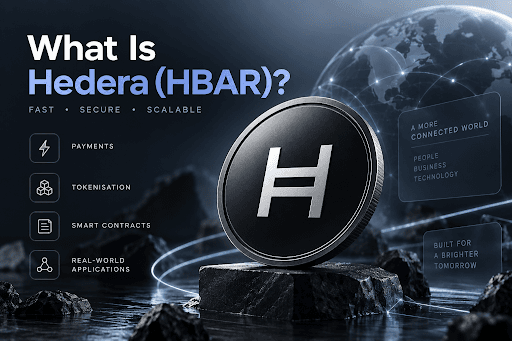
Hedera is a public distributed ledger network designed for payments, tokenisation, smart contracts, and data applications. Its native cryptocurrency, HBAR, is used to pay network fees, transfer value, and support network security through staking. Unlike conventional blockchains, Hedera uses Hashgraph consensus, which allows transactions to reach finality without mining or a traditional chain of blocks.
The Hedera network combines fast transaction processing, predictable fees, and relatively low energy consumption. These characteristics make Hedera suitable for both Web3 applications and enterprise use cases that require large numbers of digital transactions.
Using Cryptocurrency for Digital Purchases at Baxity Store
Cryptocurrencies are increasingly used for more than trading, investing, or interacting with blockchain applications. Baxity Store provides a practical way to use supported cryptocurrencies for digital purchases, allowing customers to access products such as gift cards, prepaid payment solutions, gaming products, and other digital goods. This makes it possible to turn digital assets into purchasing power for familiar online services without navigating complex blockchain applications.
Baxity Store also offers crypto-related cards and vouchers connected to popular digital platforms and payment ecosystems. Depending on the product, these options can be used for online shopping, subscriptions, entertainment, gaming, and other digital services. With support for multiple cryptocurrency payment methods and fast delivery of digital codes, Baxity Store helps bridge the gap between cryptocurrency ownership and practical everyday online spending.
What Is Hedera (HBAR)?
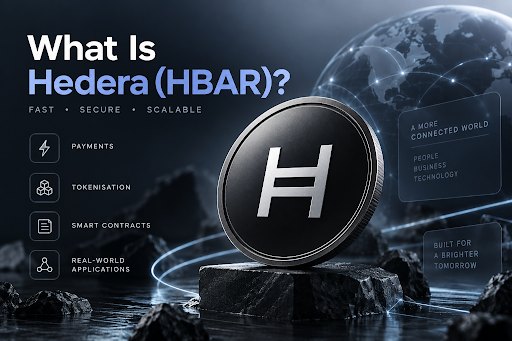
Hedera was co-founded by Leemon Baird and Mance Harmon and is based on Hashgraph technology developed by Baird. Instead of grouping transactions into sequential blocks, Hedera records events and uses Hashgraph consensus to establish their final order.
HBAR is the native cryptocurrency of the network. Users need the HBAR token to pay for transfers, token operations, smart contract execution, and other Hedera services. HBAR also contributes to the network's Proof of Stake security model.
| Feature | Hedera |
|---|---|
| Native cryptocurrency | HBAR |
| Ledger technology | Hashgraph |
| Security model | Proof of Stake |
| Maximum supply | 50 billion HBAR |
| Smart contracts | Supported |
| Native tokenisation | Hedera Token Service |
| Main uses | Fees, payments, staking and applications |
Hedera and HBAR therefore refer to different things. Hedera is the distributed ledger network and its services, while HBAR is the cryptocurrency used to operate and secure that network.
How Does Hedera Work?
Users and applications submit transactions to Hedera nodes. These nodes exchange information and use Hashgraph consensus to agree on the valid order and timestamp of transactions. Unlike Proof of Work networks, Hedera does not require miners to compete using computing power.
How Transactions Work on the Hedera Network
A transaction can involve transferring HBAR, moving another token, executing a smart contract, or using one of Hedera's native services. The basic process is:
- A user or application creates and signs a transaction.
- The transaction is submitted to a Hedera node.
- Information spreads between nodes.
- Hashgraph consensus determines its order and timestamp.
- The transaction reaches finality and the ledger state is updated.
This process provides applications with a clear result without requiring multiple additional blocks to confirm a transaction.
Hedera Nodes and Proof of Stake
Hedera uses Proof of Stake, with HBAR contributing to the consensus weight of network nodes. HBAR holders can associate their stake with a node while retaining ownership of their cryptocurrency. This allows HBAR staking to contribute to network security without the energy-intensive mining required by Proof of Work cryptocurrencies.
What Is Hedera Hashgraph and How Does Hashgraph Consensus Work?
Hedera Hashgraph is the main technological difference between Hedera and traditional blockchain networks. Instead of storing transactions in a linear sequence of blocks, Hashgraph records events and their relationships in a directed acyclic graph.
Two concepts are particularly important to Hashgraph consensus:
- Gossip about gossip allows nodes to exchange transactions together with information about how those transactions have spread across the network.
- Virtual voting allows nodes to calculate how other nodes would vote on transaction ordering without sending separate voting messages.
Together, these mechanisms allow Hedera to establish consensus efficiently. Hashgraph also provides asynchronous Byzantine Fault Tolerance, or aBFT, which is designed to maintain reliable consensus even when some network participants fail or behave incorrectly.
Hedera Hashgraph vs Traditional Blockchain
Traditional blockchains generally organise transactions into sequential blocks. Hedera instead builds a graph of events and then uses Hashgraph consensus to establish their final order. It does not use Proof of Work mining and provides deterministic transaction finality once consensus has been reached.
This does not make Hedera a replacement for every blockchain network. It represents a different approach to distributed ledger technology designed around scalability, predictable operation, and fast consensus.
What Is HBAR Used For? HBAR Tokenomics, Supply and Staking
HBAR is both a utility cryptocurrency and an important part of Hedera's security model. Users pay HBAR when they transfer assets, execute smart contracts, create or manage tokens, and use other network services.
The main HBAR token utilities include:
- paying transaction and service fees;
- transferring value;
- executing smart contracts;
- creating and managing digital tokens;
- staking and securing the network.
Many Hedera fees are defined in US dollar terms but paid in HBAR. This helps keep the reference cost of network operations relatively predictable even when the market value of HBAR changes.
HBAR Supply and Staking
The maximum HBAR supply is capped at 50 billion tokens. Tokens were not all released into circulation at launch, and circulating supply changes as previously allocated HBAR is distributed.
HBAR staking is directly connected to Hedera's Proof of Stake security model. Holders can associate their HBAR with consensus nodes, contributing to their consensus weight while retaining ownership of the tokens. Eligible participants may also receive staking rewards under the network's rules.
Hedera Transaction Fees, Speed and Network Services
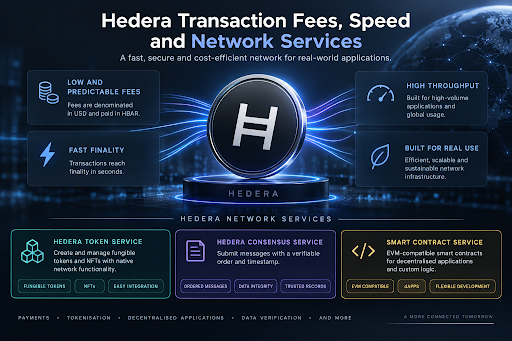
Hedera is designed for applications that require high transaction volumes, fast finality, and predictable costs. Network fees are paid in HBAR, while many fee values are denominated in US dollars, reducing the direct effect of HBAR price movements on the reference cost of individual operations.
Hedera also provides native services beyond simple cryptocurrency transfers. Hedera Token Service supports the creation and management of fungible tokens and NFTs, while Hedera Consensus Service provides verifiable ordering and timestamps for application messages.
The network also supports EVM-compatible smart contracts. Together, these capabilities allow developers to use the Hedera network for tokenisation, decentralised applications, data verification, payments, and other digital services without relying exclusively on custom smart contracts.
Hedera Governance and the Hedera Ecosystem
Hedera uses a governance model that differs from many public cryptocurrency networks. Strategic decisions are overseen by the Hedera Council, which brings together organisations from different industries and geographical regions. Council responsibilities include network policy, software updates, treasury decisions, and the long-term development of Hedera.
Membership is structured around limited terms rather than permanent control by a single organisation. Council members have equal voting rights in governance decisions, which is intended to prevent an organisation from gaining greater formal influence simply by accumulating more HBAR. This differs from cryptocurrency networks where governance can depend heavily on token ownership, mining power, or validator stake.
Hedera Governing Council and Ecosystem Organisations
The Hedera Governing Council is responsible for important decisions affecting the network and its development. Its membership has included organisations from technology, finance, telecommunications, manufacturing, education, and other sectors. This model is designed to combine distributed decision-making with the stability required by companies and institutions that may depend on Hedera infrastructure.
The wider Hedera ecosystem includes several organisations with different responsibilities. The Hedera Foundation supports ecosystem development through funding and other resources for projects building on Hedera. The Hashgraph Association focuses on technology adoption, education, innovation programmes, and partnerships with businesses, developers, and institutions. These organisations support adoption but have roles distinct from the Hedera Council itself.
Hedera Use Cases and Real-World Adoption
Hedera use cases extend well beyond transferring HBAR between accounts. The combination of native tokenisation, smart contracts, predictable transaction costs, and fast consensus allows developers and organisations to build applications for finance, commerce, gaming, data management, and other industries.
Common Hedera use cases include:
- payments and micropayments;
- stablecoins and tokenised financial assets;
- real-world asset tokenisation;
- NFTs and digital collectibles;
- gaming assets and Web3 applications;
- supply chain and product tracking;
- digital identity and verification;
- timestamping and data integrity;
- sustainability and environmental data applications.
These applications can use different parts of Hedera infrastructure. Hedera Token Service provides native functionality for issuing digital assets, Hedera Consensus Service can establish an ordered and timestamped record of events, and smart contracts provide programmable functionality for more complex applications.
Payments, Finance and Tokenisation
Low and relatively predictable Hedera transaction fees make the network suitable for applications that need to process frequent transfers or large numbers of small transactions. This can include conventional transfers, micropayments, stablecoin transactions, and other payment systems where high or unpredictable network fees could make small transactions impractical.
Tokenisation is another significant Hedera use case. Organisations can represent currencies, financial instruments, loyalty points, digital collectibles, or real-world assets as tokens. Hedera Token Service provides native tools for issuing and managing both fungible and non-fungible assets, reducing the need to reproduce standard token functionality entirely through custom smart contracts.
Financial applications can combine tokenisation with smart contracts when more complex rules are required. This makes the Hedera network relevant to developers exploring decentralised finance, digital asset infrastructure, and systems connecting conventional assets with distributed ledger technology.
Enterprise, Gaming and Data Applications
Hedera can also support supply chain records, digital identity, gaming, data verification, and enterprise workflows. Hedera Consensus Service allows applications to obtain consensus timestamps and ordering for submitted messages. This can be useful when multiple parties need to verify the sequence in which events occurred without placing all underlying application data directly on the public ledger.
Gaming and NFT applications can use Hedera for digital ownership, collectibles, and transfers of in-game assets. Sustainability applications can use distributed records to support environmental reporting, emissions data, or tokenised environmental assets. These examples demonstrate how HBAR use cases are connected to a broader infrastructure rather than being limited to cryptocurrency payments.
Hedera Advantages, Limitations, Security and Sustainability
One of Hedera's main advantages is that its architecture provides consensus without Proof of Work mining. Hashgraph consensus offers deterministic finality, while Proof of Stake connects network security to HBAR instead of requiring miners to compete through large amounts of computing power.
Hedera is also designed around relatively predictable transaction costs. Many network fees are denominated in US dollars and paid in HBAR, helping applications estimate the reference cost of network operations. This can be particularly important for businesses processing large numbers of transactions, where even small changes in the cost of each operation can affect overall expenses.
Other notable characteristics include native token services, EVM-compatible smart contracts, fast finality, and relatively low energy requirements. Together, these features make Hedera suitable for applications that need frequent interactions with a public distributed ledger.
However, the network also has limitations. Hedera has a smaller developer ecosystem and fewer applications than Ethereum, which can affect the range of available tools, integrations, and decentralised services. Its council-based governance model is also different from the more permissionless structures preferred by some cryptocurrency users.
HBAR itself remains a market-traded cryptocurrency. Its value can fluctuate significantly even when the underlying network continues to operate normally. Technical performance and cryptocurrency price should therefore be considered separate characteristics of the Hedera ecosystem.
Hedera Security and Sustainability
Hedera security relies on Hashgraph consensus combined with Proof of Stake. The consensus mechanism provides asynchronous Byzantine Fault Tolerance, or aBFT, and is designed to reach valid agreement even when some network participants fail or behave maliciously, provided the protocol's security assumptions remain satisfied.
Proof of Stake also makes control over consensus economically connected to HBAR. This provides an incentive structure for protecting the integrity of the network without introducing the computational competition associated with Proof of Work mining.
Hedera's sustainability profile is partly a consequence of this design. Because miners do not continuously compete to solve computational problems, network consensus requires substantially less energy than Proof of Work systems. Energy efficiency can be particularly relevant for high-volume applications and organisations that consider environmental impact when choosing digital infrastructure.
How to Store and Use HBAR Cryptocurrency
HBAR cryptocurrency can be held through custodial services, such as supported cryptocurrency exchanges, or in compatible self-custody wallets where users control their own private keys. Custodial platforms may provide a simpler interface, while self-custody gives users direct control over their assets and places greater responsibility on them for protecting wallet credentials and recovery information.
Before transferring HBAR, users should confirm that the receiving wallet or service supports the Hedera network. Account details should be checked carefully before a transaction is submitted because confirmed cryptocurrency transfers generally cannot be reversed in the same way as conventional card payments.
Users who hold HBAR can use it for several purposes within the network. Depending on the application or service, HBAR can be used to pay transaction fees, transfer value, participate in staking, execute smart contracts, manage tokens, or interact with decentralised applications built on Hedera.
Security practices remain important regardless of how HBAR is used. Users should protect private keys and recovery phrases, verify wallet software and websites before connecting accounts, and avoid sharing credentials with third parties.
Conclusion
Hedera is a public distributed ledger network that takes a different technical approach from conventional blockchains. Instead of organising transactions into a sequential chain of blocks, it uses Hashgraph consensus to establish transaction order and finality. Its native HBAR cryptocurrency supports this infrastructure by paying network fees, transferring value, and contributing to security through Proof of Stake.
The network extends beyond HBAR transfers through Hedera Token Service, Hedera Consensus Service, and EVM-compatible smart contracts. These technologies support use cases ranging from payments and tokenisation to gaming, data verification, enterprise applications, and digital asset infrastructure. Fast finality, predictable fees, and energy-efficient consensus are among the characteristics that distinguish Hedera from many other distributed ledger platforms.
At the same time, Hedera operates within a competitive cryptocurrency ecosystem, and its future adoption depends on developers, businesses, applications, and users continuing to find practical reasons to use the network. Beyond individual networks such as Hedera, services including Baxity Store demonstrate another side of cryptocurrency utility by enabling supported digital assets to be used for gift cards, gaming products, prepaid solutions, and other digital purchases.
Hedera (HBAR) FAQ
How Are Hedera Accounts Identified?
Hedera accounts can be represented by numerical account IDs, typically written in a format such as 0.0.x, although the network also supports account aliases. This structure differs from the long hexadecimal addresses commonly associated with Ethereum and many other blockchain networks. An account can hold HBAR as well as tokens created through Hedera Token Service. Depending on the wallet or service being used, users may see either a Hedera account ID or another supported address format. Compatibility should therefore be checked before transferring assets between different platforms. Sending funds using unsupported account information can result in failed transactions or loss of access to transferred assets.
What Are Hedera Mirror Nodes?
Mirror nodes provide historical and analytical information about activity on the Hedera network without participating directly in consensus. They receive data generated by consensus nodes and make it available to applications, explorers, analytics platforms, and developers. This allows applications to query historical transactions, account activity, tokens, smart contracts, and other network records without placing additional query workloads on consensus nodes. Mirror nodes are particularly useful for services that need to display blockchain-style transaction histories or monitor network activity. They can also support reporting, auditing, and application analytics. Separating consensus processing from historical data queries is one of the architectural features of the Hedera ecosystem.
Can Ethereum Applications Be Built on Hedera?
Hedera supports the Ethereum Virtual Machine, allowing developers to deploy Solidity-based smart contracts and use many familiar Ethereum development tools. This can reduce the amount of additional work required when developers want to bring an Ethereum-oriented application to Hedera. However, Hedera is not identical to Ethereum, so differences in network architecture, fees, native services, and account handling still need to be considered. Developers can also combine smart contracts with native Hedera services instead of implementing every function inside Solidity contracts. For example, token management can use Hedera Token Service while application-specific logic remains in a smart contract. This gives developers several ways to structure decentralised applications depending on their technical requirements.
What Is Token Association on Hedera?
Some Hedera tokens require an account to be associated with the token before that account can receive it. Token association helps account holders control which assets can be sent to their accounts and can reduce unwanted token transfers. Depending on the wallet and token configuration, association may happen manually or through supported automatic association functionality. This requirement is especially relevant when users receive tokens created through Hedera Token Service rather than native HBAR. Wallet applications usually handle much of the process, but users should still understand why a token may not immediately appear or be transferable. Checking token compatibility and association requirements can prevent confusion when using Hedera-based assets.
What Happens to Hedera Fees When the HBAR Price Changes?
Network operations are generally assigned fee values based on US dollar-denominated pricing, while the actual payment is made in HBAR. As the market value of HBAR changes, the amount of HBAR required to cover a particular dollar-denominated fee can therefore change as well. A higher HBAR price may mean fewer HBAR are needed for the same reference fee, while a lower price can require more tokens. This mechanism is designed to make the underlying cost of network services less dependent on short-term cryptocurrency price movements. Users should still check the actual fee shown by their wallet or application before approving a transaction. More complex operations, such as certain smart contract interactions, can also cost more than simple HBAR transfers.
Can Tokens Created on Hedera Be Different From HBAR?
Yes, Hedera supports many digital assets in addition to its native HBAR cryptocurrency. Developers and organisations can create fungible tokens, NFTs, stablecoin-style assets, loyalty tokens, digital certificates, and other tokenised assets through Hedera Token Service. These tokens can have their own supply rules and administrative settings that are separate from HBAR tokenomics. Some assets may include controls for functions such as minting, freezing, pausing, or managing supply, depending on how the issuer configures the token. As a result, holding a Hedera-based token does not mean that it has the same properties or decentralisation characteristics as HBAR. Users should evaluate each token independently and understand its issuer, functionality, and configuration before interacting with it.


Comments
Sign in to join the conversation. Every comment is reviewed before it appears on the page.
Sign in to comment
You need an account to leave a comment. Sign in and your name will be used automatically.
No comments yet. Be the first to write one.